Tribute: Stuart Brooks
Following the passing of the Trust’s former CEO and nature conservationist Stuart Brooks, we are rerunning an interview first published in our Members’ Journal in 2017. We remember him with great affection and are sad that another of life’s gentlemen has been taken too soon.
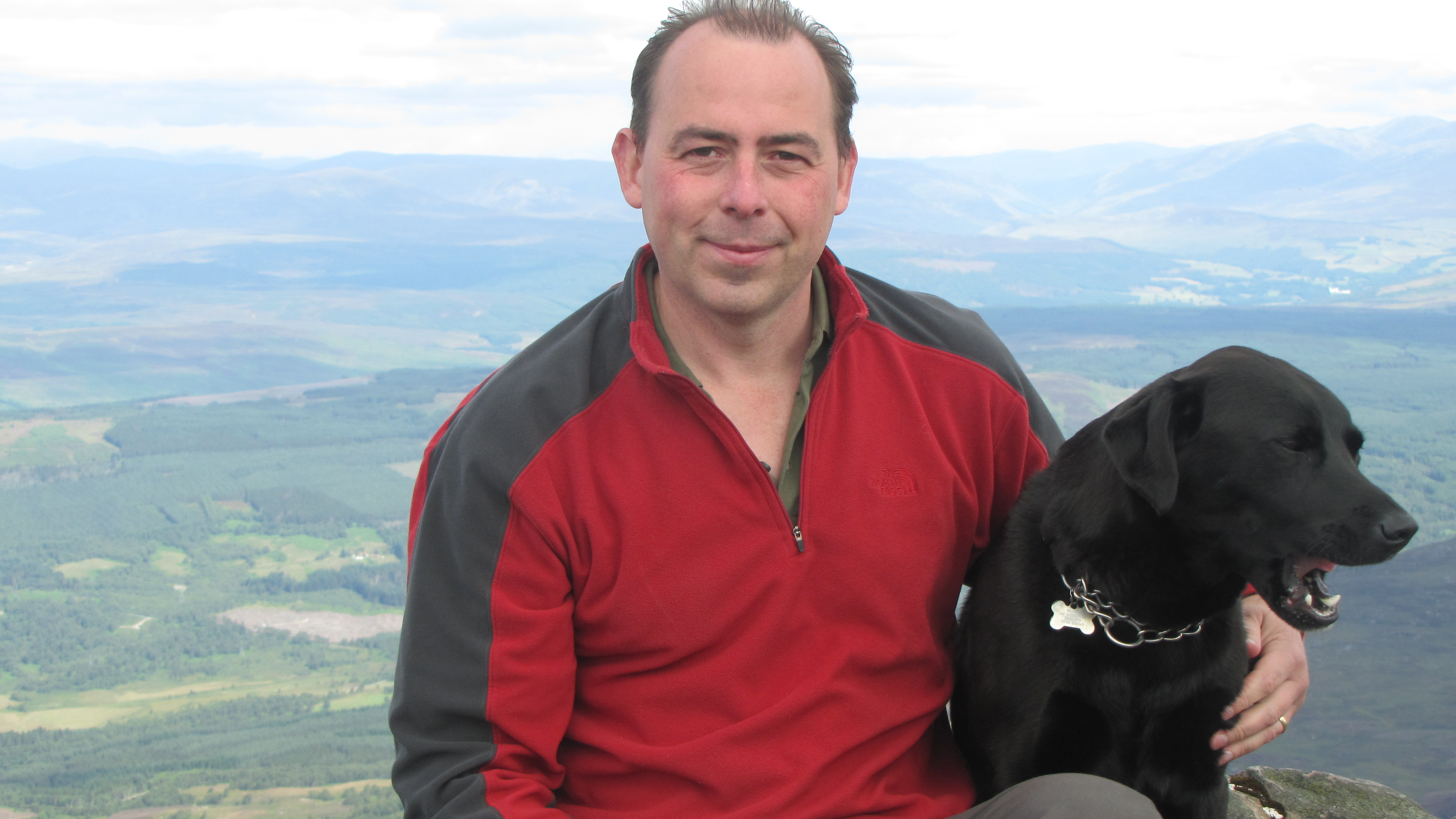
Stuart Brooks’ first memory of Scotland was travelling up the A9 past Pitlochry bound for the far north west. Hailing from the flat marshlands of the Cambridgeshire Fens, the rugged mountain landscape blew him away, and would draw him back to the Highlands time and time again. But it was that week spent on a peat bog in the shadow of Foinaven that would shape the future course of his life.
Stuart had come to Scotland on a field trip as part of his geography degree at Newcastle University. “We camped out by the river and sat out on a hill every day surveying peatland. From there I taught myself the basics of peatland ecology. So I left university with a modicum of knowledge about peatlands just at a time when the habitat was getting on the nature conservation radar.”
Stuart acquired his love of nature as a boy in the idyllic Georgian market town of Stamford. “Growing up on the edge of the countryside gave me access to the kind of wild places that some of us are lucky enough to discover at a young age. For me that was the River Welland, which winds its way through the water meadows of Stamford. I would walk along it, sit by it, fish in it and swim in it. These experiences gave me a love not just of the outdoors, but of the value of solitude within nature.”
Before he joined the Trust, Stuart spent 15 years working for the Scottish Wildlife Trust (SWT), which he joined as a field officer on an EU-funded raised bog project. For two years, he researched peatland restoration across Europe. That “modicum of knowledge” he had acquired as a student in Sutherland grew and grew; in 1997, he co-authored Conserving Bogs: The Management Handbook, which remains to this day the definitive guide to managing and restoring peatlands.
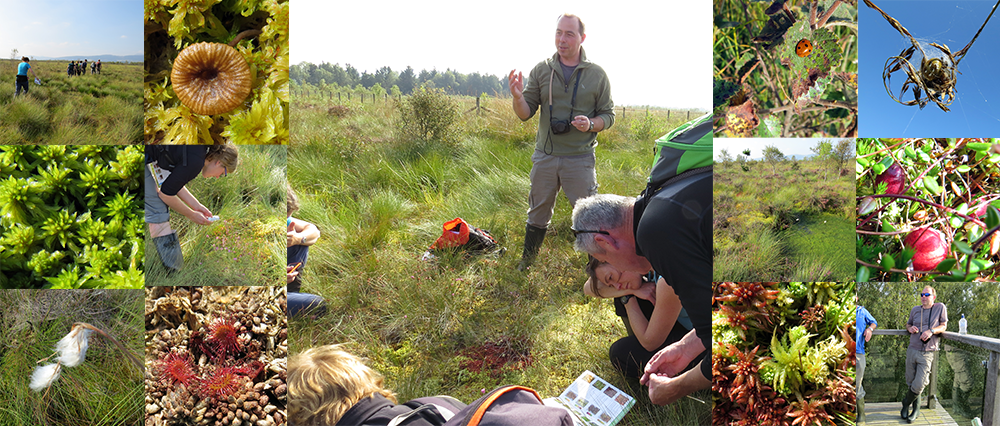 ^ Stuart Brooks with John Muir Trust staff at Flanders Moss NNR in 2014.
He later moved on to become SWT’s Director of Conservation, in charge of its nature reserves, policy and communications and helping develop a pioneering new vision of conservation “going beyond traditional nature conservation, which focuses on priority habitats and species, to one which looked towards a landscape-scale approach”.
When the opportunity came along, Stuart was keen to continue on that journey with the John Muir Trust. He was attracted by the "amazing portfolio" of properties managed by the Trust.
He was more familiar with the National Trust for Scotland, the RSPB, the Woodland Trust and other environmental NGOs, whereas the John Muir Trust “was a bit more of an unknown quantity”. But he was attracted to the Trust’s honesty about the value of landscape.
“As a nature conservationist, you tend to focus on wildlife. But most people go into the countryside not just to look at wildlife – they like to be in that place because of how it makes them feel.”
He thought that “the general public tends to place a higher value on landscape than many nature conservationists”. That emotional connection cannot be measured scientifically, but for Stuart, “the idea of a landscape aesthetic has added something to my approach as a conservationist”.
Stuart confessed that when he first arrived at the Trust, he initially struggled to weld together different components of the organisation. “The Trust had this tremendous engagement initiative, the John Muir Award. It owned and managed some of the finest areas of wild land in the Highlands. It had teams of dedicated volunteers carrying out vital conservation work. And it was beginning to have a voice in the policy area.
“I wanted to connect these things – find the golden thread – so pretty early on I went through a comprehensive exercise to develop a new vision, not just for the Trust but for wild places more generally.”
He involved staff, trustees and members in the shaping of a document, Our Essential Wildness, published in 2010, drawing together the different strands of the Trust into a cohesive vision. It included a map, produced by Dr Steve Carver at the University of Leeds Wildland Research Institute, delineating the top 10 per cent of the UK’s wildest land, almost all of it in the Scottish Highlands. This work showed a lack of protection for wild landscapes, especially in Scotland.
Six years on, the position looked more optimistic: an area covering 20 per cent of Scotland’s landmass was officially recognised by the Scottish Government as wild land, and provided with some protection.
“The publication of the Wild Land Areas map was a major milestone. Just to have wild land acknowledged as a legitimate concern in public policy was a crucial breakthrough. And the official definition of wild land, developed by SNH [now NatureScot] and accepted by the Scottish Government, was in tune with the John Muir Trust’s view.”
Stuart believed that the long, hard campaign to get where we are now was complicated by the fact that the biggest impact on wild places in recent years came from the renewables sector in the form of large-scale wind farm development.
“The Trust’s stance has brought us into conflict, but the debate is shifting and there is acceptance that development cannot come at the cost of destroying wild land of national importance. Hopefully the conflict between large-scale industrial development and wild places will now start to diminish, and the Wild Land Areas will be seen, not just as a planning constraint, but as a valuable asset that can benefit people and communities as well as nature.”
Stuart emphasised that the Trust’s conservation philosophy for its core wild land areas is “to work with natural processes and, where possible, allow nature to determine its own outcome”.
Yet this also brought challenges, from a different direction. “We’ve taken a progressive view on deer management to support the wider public as well as private interests.” Always an optimist, Stuart believed that change was happening for the better. “There are numerous public and an increasing number of private landowners who share our vision for more sustainable deer management.”
Less contentious was the Trust’s central role in helping bring people together with wild nature. The John Muir Award engages with hundreds of organisations and is “a fabulous ambassador for the Trust”.
He was proud too of the Wild Space visitor centre, which he steered to completion in 2013. It has since welcomed well over 100,000 people through its door and become a major cultural asset to the Highland Perthshire community.
Related News
28 Sep 2026
A grand day out at Glenlude
15 Sep 2026
The path ahead for the John Muir Way