Trust CEO addresses convention on industrialisation of wild places
Trust joins community leaders across Scotland to call for a pause on industrialisation of wild places.
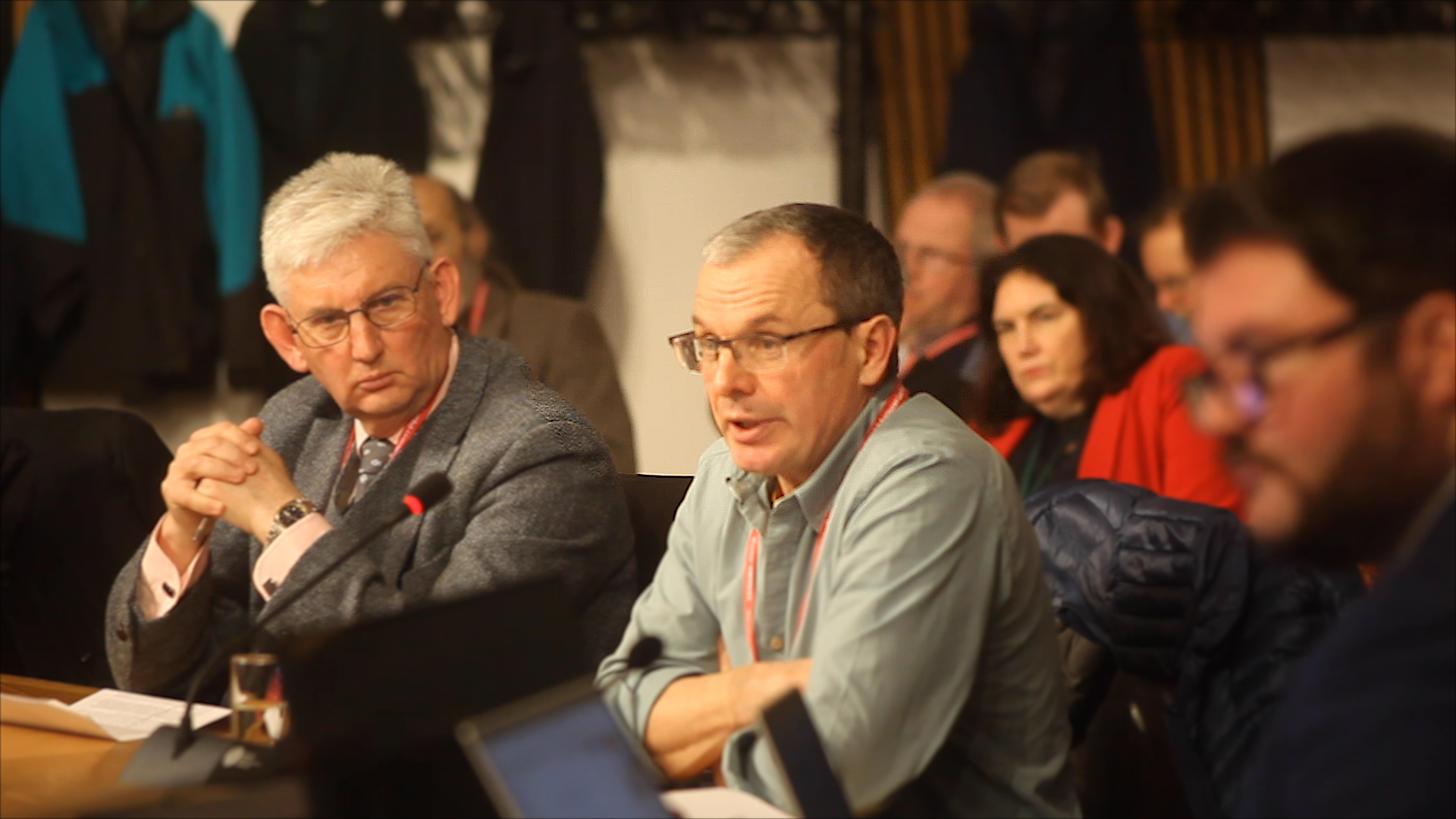
Photograph: Vox Vallium
A convention of community leaders from the south of Scotland, Perth and Kinross, north-east Scotland and the Highlands – along with the Trust’s CEO David Balharry – met with Cabinet Secretary for Climate Action and Energy, Gillian Martin and other MSPs at Holyrood on Monday 24 February.
Their aim was to ask for a pause on major energy infrastructure planning applications – to avoid a chaotic energy roll out
The meeting was organised by Highland councillor Helen Crawford who reported afterwards that Gillian Martin made a pledge to establish a forum to directly involve communities in discussions around the development of the Strategic Spatial Energy Plan.
She added: “Special thanks to John Muir Trust and Action to Protect Rural Scotland for their excellent supporting contributions and to all of the community council representatives who spoke. The depth of feeling, and indeed expert knowledge in that Committee Room, was outstanding.”
Trust CEO David Balharry addressed the convention, saying: “I respect and agree with all the concerns from communities across Scotland that are questioning the costs and benefits of this industrialisation. We welcome and support the need for a pause.
“I also accept that officials are working within a decision-making framework that has been given to them. However, that decision-making framework is deeply flawed as a result of the National Planning Framework 4 (NPF4), which opened the door for development on what we call Wild Land Areas.
“We are the only charity in the UK solely dedicated to the protection of wild places, where nature, natural processes and natural landscapes are free to flourish and exist happily alongside flourishing communities.
“The problem is that with the rate of industrialisation and NPF4, any consideration for the iconic part of Scotland's landscape is no longer there.
“Officials are making decisions within the framework and that means they are no longer considering what's happening to Scotland's landscape at a strategic scale.
“One thing that absolutely astonished me is that there are probably now only two Munros left in Scotland that you can't see wind turbines from. That isn't a decision that Scotland consented to – and we urgently need to protect what is left.”
- Find out how you can help by taking action to Protect the Wild.
Help us defend wild places and campaign for their protection
Support our work in wild places
Related News
15 Sep 2026
The path ahead for the John Muir Way
14 Sep 2026
Work starts on Glenlude's gathering shelter