Protecting the wild
The Trust's Head of Policy, Thomas Widrow, speaks with communities affected by industrial developments in wild places – and outlines the Trust’s plan to help take up the fight.
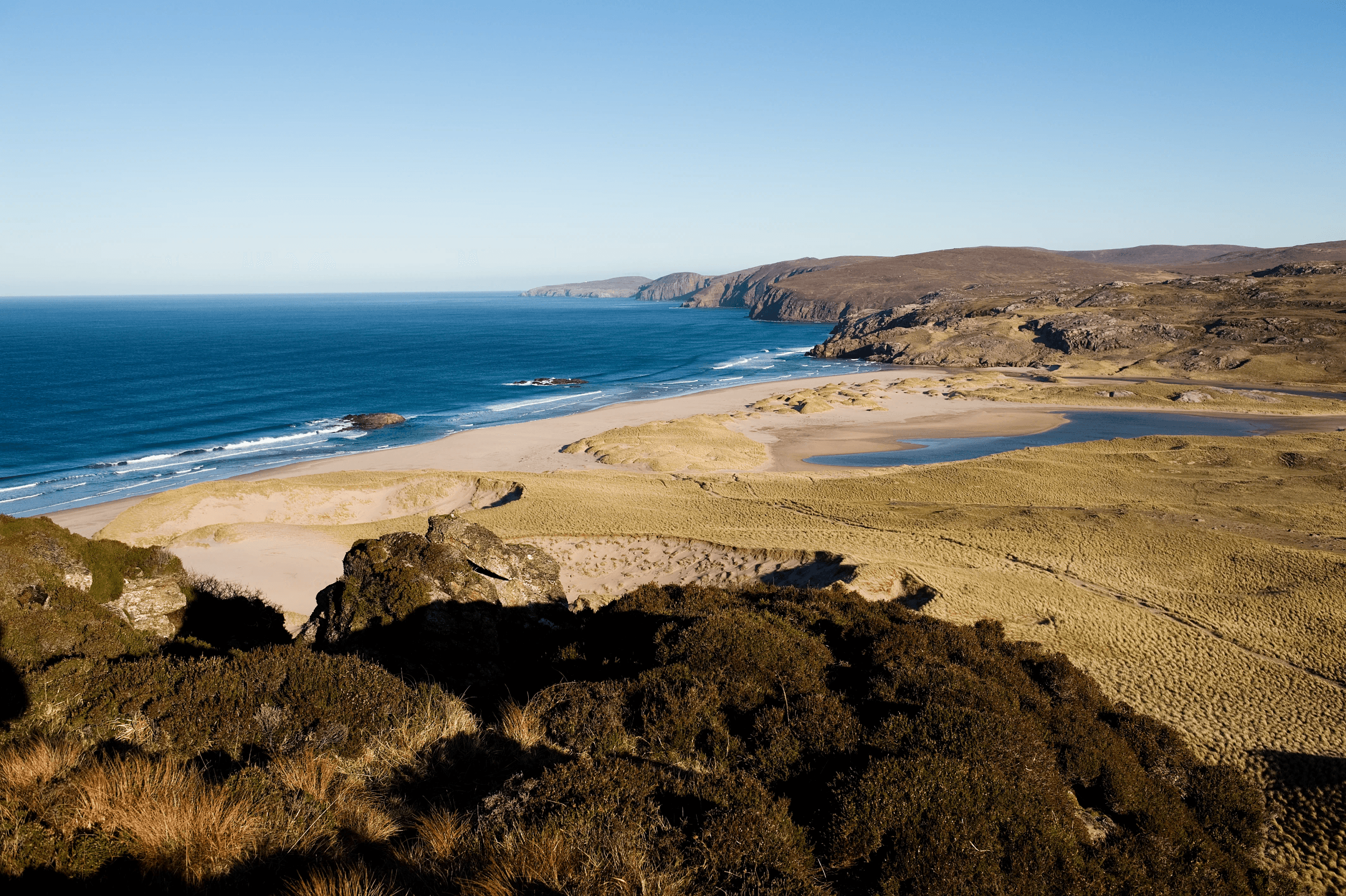
It was one of those unsettled Highland autumn days that seemed to suggest both staying indoors and heading out into the elements. I chose the latter and set off north for Sandwood Bay, the Trust’s most northerly property.
As I crossed the dunes, the Atlantic made itself known before it came fully into view – the smell of salt on the wind, the steady crash of waves on the shore. Sandwood is framed by sea cliffs and sits a few hours’ walk from the nearest road. Places like this have a particular quality: a sense of openness and distance that draws the attention completely.
Sitting in the shelter of a dune, I found myself thinking about time. The fine sand beneath my hands began as rock and mountain long before any of us arrived. Natural forces shaped the beach over millennia.
But the future of places like Sandwood can change far more quickly. Recently, we learned that proposals are being developed for a wind farm at Kinlochbervie, on land bordering the Trust’s Sandwood estate. The turbines would be visible across a wide area, from the summit of Quinag to Sandwood Bay itself. Much of the long walk back to the car park would take place within sight of turbine blades.
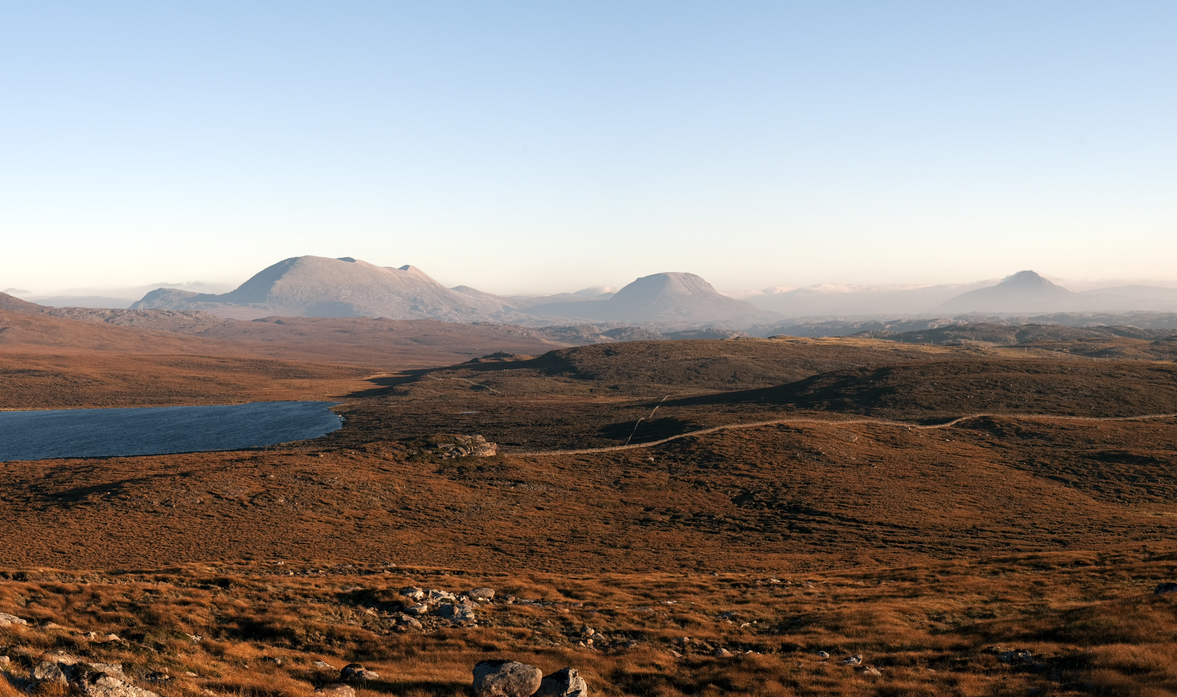 ^ One of the areas that will be overshadowed by wind turbines if the Kinlochbervie development plans are approved.
The proposal is one of many across Scotland, with a surge of large-scale energy developments moving through the planning system as part of the drive toward net zero. These projects are often located in remote areas valued for their wild landscapes.
Before going further, it is important to clarify one thing. The Trust fully recognises the climate crisis and the urgency of addressing it. Indeed, the climate crisis is already affecting landscapes and communities across Scotland and the wider UK.
It is also closely tied to the nature crisis. Damage to ecosystems weakens nature’s ability to store carbon and regulate the climate, creating a cycle in which both problems reinforce each other in a downward spiral.
Common views
Many of the people I meet in communities facing large-scale developments recognise this. Their concern is not about whether Scotland should move to renewable energy. It is about how that transition happens, and where.
Recently, I invited several community representatives to talk about their experiences. Strathnairn Community Councillors have been dealing with a surge of wind farm proposals in the glens on the edge of the Monadhliath. Julie, who has been involved in the Trust’s Protect the Wild campaign, came with fellow community representatives Maria, Rob, Beth and Tim. Gary joined us from Stratherrick and Foyers, where further energy developments are being proposed around Loch Ness.
All spoke passionately about the landscapes on their doorsteps – places where people walk, cycle and explore, and where their children grew up with easy access to wild landscapes and big horizons. They were visibly distraught that these areas are now threatened by development. They also described the pressure communities face when multiple large developments are proposed at the same time. Many have spent months reading planning documents, organising responses and preparing detailed objections, even in the face of incredibly poor odds.
“The reason I joined the battle to protect the environment is simple – doing nothing is just not an option,” noted Rob from Strathnairn Community Council. “I couldn’t live with myself if I did nothing. You never give up.”
Developers sometimes argue that communities should accept these projects in return for limited local benefits. Yet many residents feel they are being asked to trade long-term landscape change for relatively small compensation.
Maria summed up the concern clearly: “It’s not just about the here and now. It’s about a legacy we need to protect – because once it’s gone, it’s gone.”
Democratic process
Despite the challenges, these communities remain engaged in the democratic process. Their experience highlights a broader issue. Scotland’s planning system currently places significant weight on large-scale energy developments, while communities and environmental groups struggle to ensure that landscape and ecological impacts receive equal attention.
That imbalance undermines public confidence in the transition to renewable energy. The solution is not to abandon climate action. Scotland needs renewable energy, but the way it is delivered matters.
A clearer national energy strategy would help. That strategy should look not only at where energy is generated but also at how demand can be reduced – through better home insulation, improved public transport and other efficiency measures.
There is also a legitimate question about who benefits from renewable energy generation. Many communities hosting major developments face some of the highest energy costs in the UK, with fuel poverty a persistent problem in parts of rural Scotland.
Community benefit payments remain optional and relatively modest compared with the revenues generated by private developers. Nature and wild places, of course, receive no benefits at all. All of which suggests the current planning system is not delivering as intended and requires adjustment.
Adding weight
The Trust is supporting communities by looking to reform the planning system to ensure protections for the country’s wildest landscapes. The aim would not be delay for its own sake, but for time to ensure that Scotland’s climate response protects nature as well as the climate.
With careful planning, Scotland can achieve both. Renewable energy can be developed in ways that respect landscapes and ecosystems, while communities play a meaningful role in shaping decisions that affect their surroundings.
We want to help create a Scotland where communities are driving development, not fighting them; where we all use less energy and have access to what we need for less, eliminating fuel poverty in a country that is incredibly energy rich; and where each wind turbine contributes to fighting the nature crisis and delivering climate justice.
The alternative – allowing the transition to unfold without that balance – risks the destruction of Scotland’s wild landscapes.
Communities across the country are asking for a better approach. The Trust will add its weight to help make that case because those communities and wild places deserve better.
Join our Protect the Wild Campaign!
Our Protect the Wild campaign calls for a better balance – one that delivers clean energy while safeguarding the wild places that define us.
The campaign focuses on raising awareness of how industrial developments are transforming wild places such as Sandwood Bay and Quinag, which could be affected by proposals for a wind farm at Kinlochbervie.
This year the campaign is:
- Commissioning national polling to understand
public views - Planning to object to the Kinlochbervie proposal
- Growing a nationwide supporter base.
Looking ahead, the campaign will advocate for reforms to Scotland’s planning framework, ensuring wild landscapes are properly considered in future decisions.
Scotland can and should lead on climate action without sacrificing its wild places. Protect the Wild aims to make sure both priorities go hand in hand.
Please join the fight by signing up to support our Protect the Wild campaign.
- This article first appeared in the Spring / Summer 2026 edition of the John Muir Trust Members' Journal. If you would like to receive our Journal twice a year please consider joining the Trust as a Member.
Help us defend wild places and campaign for their protection
Support our work in and for wild places
Related News
28 Sep 2026
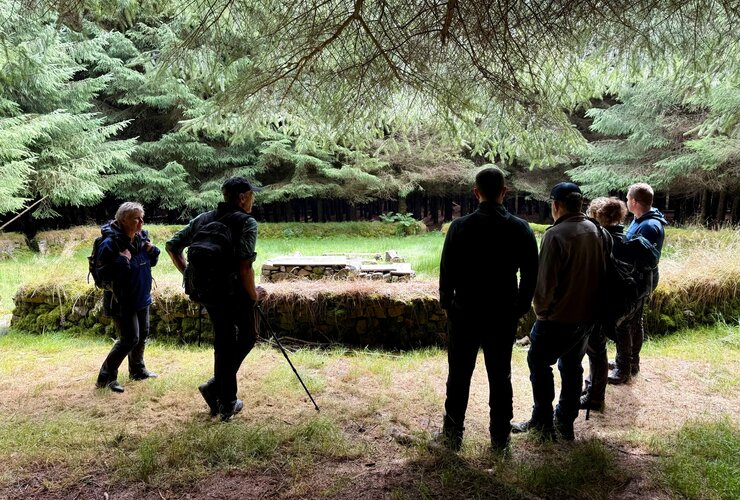
A grand day out at Glenlude
15 Sep 2026
The path ahead for the John Muir Way