Deer management matters
Douglas MacMillan argues that restoring Scotland's native woodlands requires greater support for natural regeneration through deer management and reduced reliance on fencing.
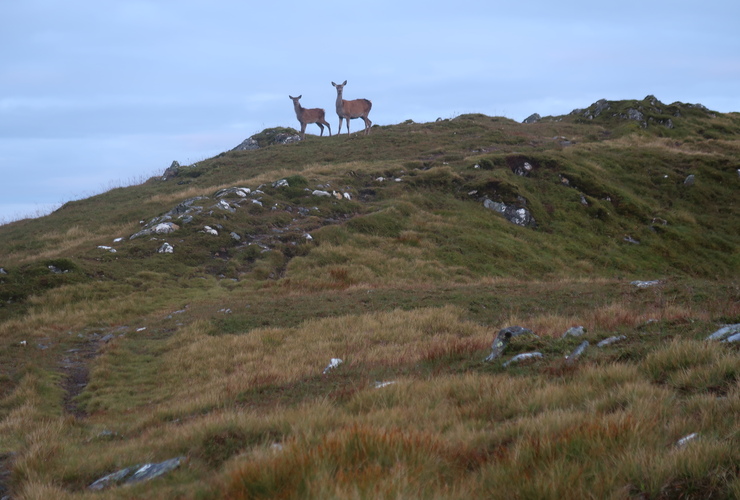
Less than two hours after disembarking from the overnight sleeper from Euston, I found myself high on the hill above Rannoch Moor, rifle in hand and thermos in pocket. It was a dreich day, low mist and a light drizzle from the west - the kind of day I would not have chosen if I was out walking with friends, but I was working.
My work was to shoot a deer, a hind to be exact (a female red deer) at close quarters. It was late autumn and the hind cull is always challenging for land managers as clients are few and far between, tips are scarce and the weather can be – well shall we say, quite Scottish – wind, hale and sunshine all in one day!
But the hind cull is crucial to nature recovery in wild places, such as John Muir Trust estates on Knoydart and on Skye. Hind numbers are key to reducing deer densities to below two per km² – the density needed to enable woodland to regenerate – though it is often a part of deer management that traditional estates ignore with the focus on stags. While stags do most damage to regenerating woodland in the winter, hind reduction is essential to reduce overall deer population pressure.
Natural regeneration
Although nature recovery through deer management results in woodlands rich in biodiversity and is far superior to the ‘plant and fence’ model preferred by investors in ‘natural capital’, the work of the Trust and other like-minded landowners who put natural processes first is not as well supported by the Government grant system for woodland expansion – The Forestry Grant Scheme (FGS).
Grant payments per hectare are much lower for natural regeneration than for the more intensive ‘plant and fence’ approach that involves ground cultivation, planting of nursery transplants and installation of two-meter high metal fencing.
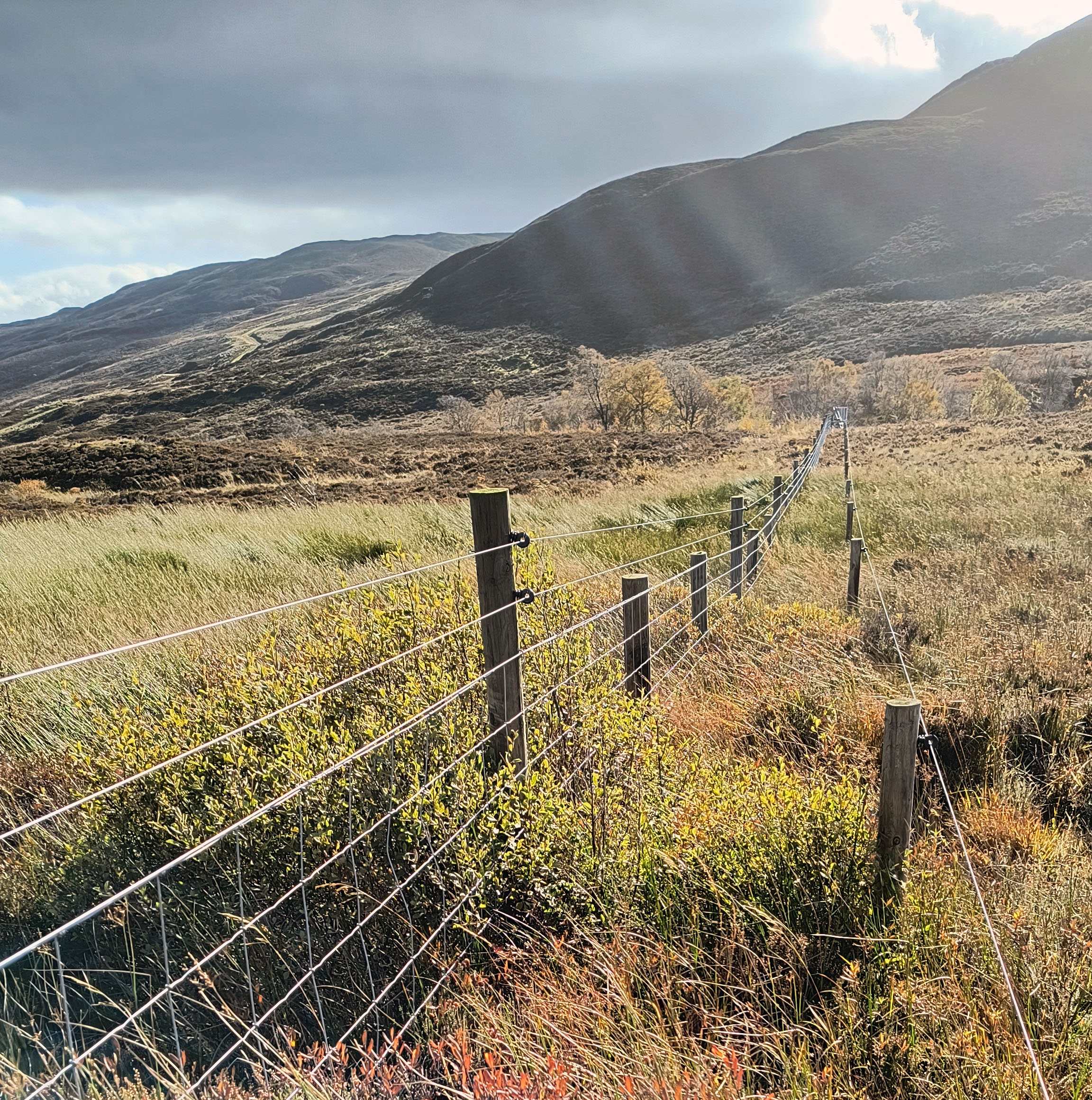
As a consequence, over 95 per cent of all woodland created in Scotland is by planting, and it is almost always fenced. There are various reasons for this, many of them quite anachronistic dating back to the time when timber production was the sole objective of woodland expansion.
Landowners manage their land for different purposes, which has seen opposition from traditional sporting estates to more intensive culling regimes. These landowners tend to prefer fencing as a solution.
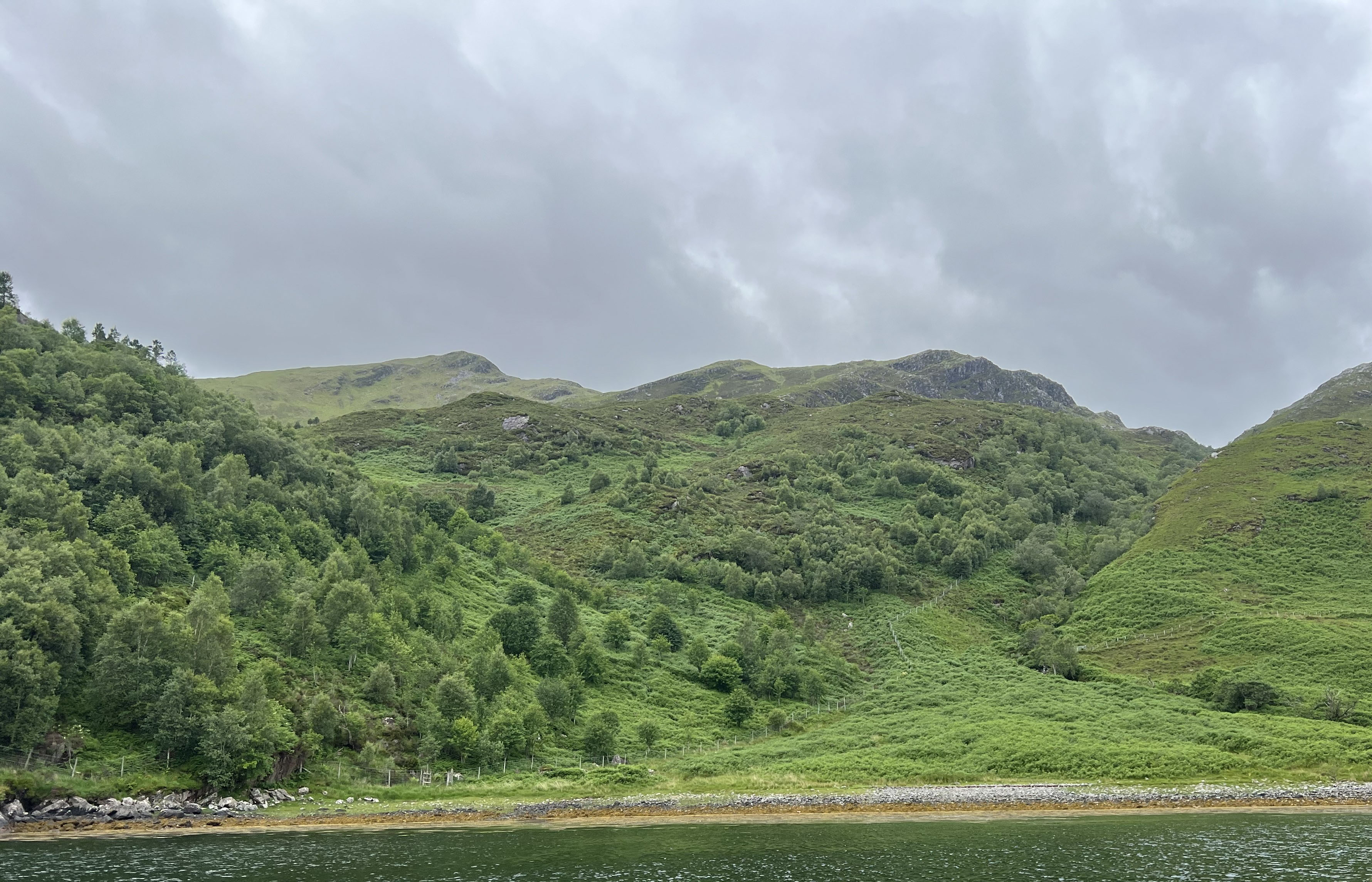
The Trust has used and continues to use fencing as a last resort to protect natural regeneration of young trees. Over recent years, the reduction in deer densities on Knoydart means that fencing installed by the Trust some decades ago, is planned to be removed in the next couple of years. This will significantly improve the wild place quality of this land. Meanwhile, at East Schiehallion, the Trust is embarking on the installation of a stock fence with an electric offset wire, as the only way to protect rare montane trees from wandering sheep as well as deer.
I believe the government should be doing more to support the Trust and other landowners to achieve woodland expansion through natural processes by significantly increasing the FGS payments for natural regeneration and better coordination of existing policies that support venison production and community stalking. At this stage it may not be practical to implement this new approach across the entire deer range, so I suggest the Government focus on those areas where science-led deer control can be deployed to benefit existing woodland owners and would generate least opposition from sporting neighbours.
Fence-free zones
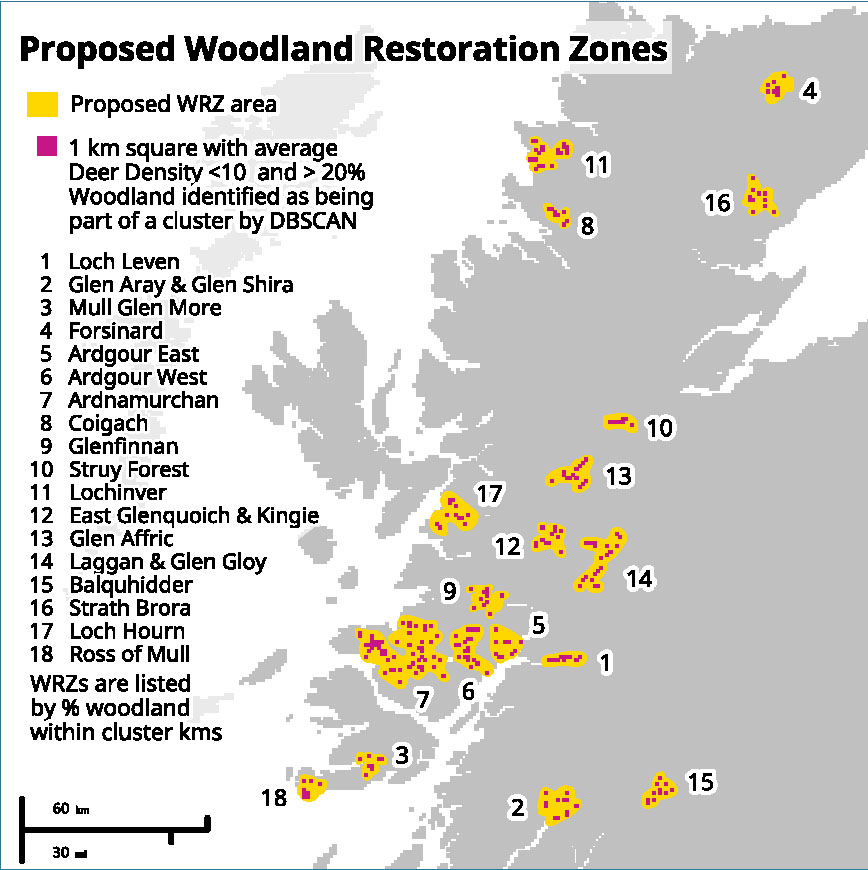
In a paper I co-authored with Euan Stevenson, which was published recently in the summer edition of Scottish Forestry, we call on the Scottish Government to establish Woodland Restoration Zones (WRZs), across selected landscape areas in the red deer range, that will encourage woodland expansion through ‘fence-free’ deer culling.
These zones would not require any new legislation, but would seek, through modest increases in grant support for landowners to create new woodlands using deer culling, not fencing. To be cost-effective, WRZs would need to be located in areas with already relatively low deer densities and significant forestry landholdings (and therefore lower potential acrimony with sporting interests).
WRZs represent an opportunity to promote and develop sustainable deer management to the benefit of all woodland owners. A long-term commitment to support deer culling, as opposed to fencing, would not only effectively deal with the problem of deer infiltration and population replenishment that undermines current efforts within WRZs, it would also encourage investment in local venison processing and create opportunities for local communities to participate in culling for venison.
To identify potential candidate locations for WRZs across the red deer range, we used two primary data sources: deer density statistics collected by NatureScot and its predecessors, and forest cover data from the National Forest Inventory produced by the Forestry Commission to locate potential pilot areas for this approach. In total, we identified 18 clusters incorporating 267km², and indicative WRZ boundaries were drawn around these clusters.
In many ways this approach mirrors what is actually happening on the ground in a few places, including on Trust land, through innovative landscape collaborations such as the Nevis Landscape Partnership in Lochaber. However, the introduction of WRZs across the country based on reform of the FGS would create wider landscape opportunities and crucially, be financially supported by increased grant payments.
These higher rates of grant are justified by the higher public benefits generated by natural regeneration compared to planting and by the initial high costs of deer culling and management across the landscape.
It is also imperative that the current strict conditions on eligibility for FGS payments for natural colonisation, (for example, restricting the area eligible for grant to 50m or less from a seed source and a stocking density of at least 400 stems/ha within five years), should be significantly relaxed.
Fencing would not be totally banned in WRZs, but there would be a presumption against fencing, with only small fenced exclosures not exceeding 10 per cent of the total area permitted allowed to support the reintroduction of tree species especially vulnerable to deer.
Woodland landscapes without fences within WRZs would I believe, transform access and biodiversity quickly and is exactly what our wild places require to recover their wildness. Woodland edges would become more natural, especially montane woodland, benefiting recreation, tourism and biodiversity in equal measure. And it would recognise the work being carried out by the Trust as leaders of change and champions of wild places.
About the author
Douglas MacMillan is a Trustee of the John Muir Trust and Emeritus Professor. He has worked on deer management and ecological restoration for over 30 years and has a special interest in deer and forestry policies that promote nature. Prior to becoming a university acaedmic he worked at James Hutton Institute, Aberdeen and had a brief spell as forest manager at Tilhill Forestry, Stirling.
- This article first appeared in the Autumn / Winter 2026 edition of the John Muir Trust Members' Journal. If you would like to receive our Journal twice a year please consider joining the Trust as a Member.
Photo of red deer hinds by Grahame Nicoll
Related News
20 Oct 2026
On the right track

7 Oct 2026
Beyond the boundary on Schiehallion