Award-winning partnership celebrates at Glenlude
Trust partner Phoneix Futures returns to Glenlude for its annual planting day.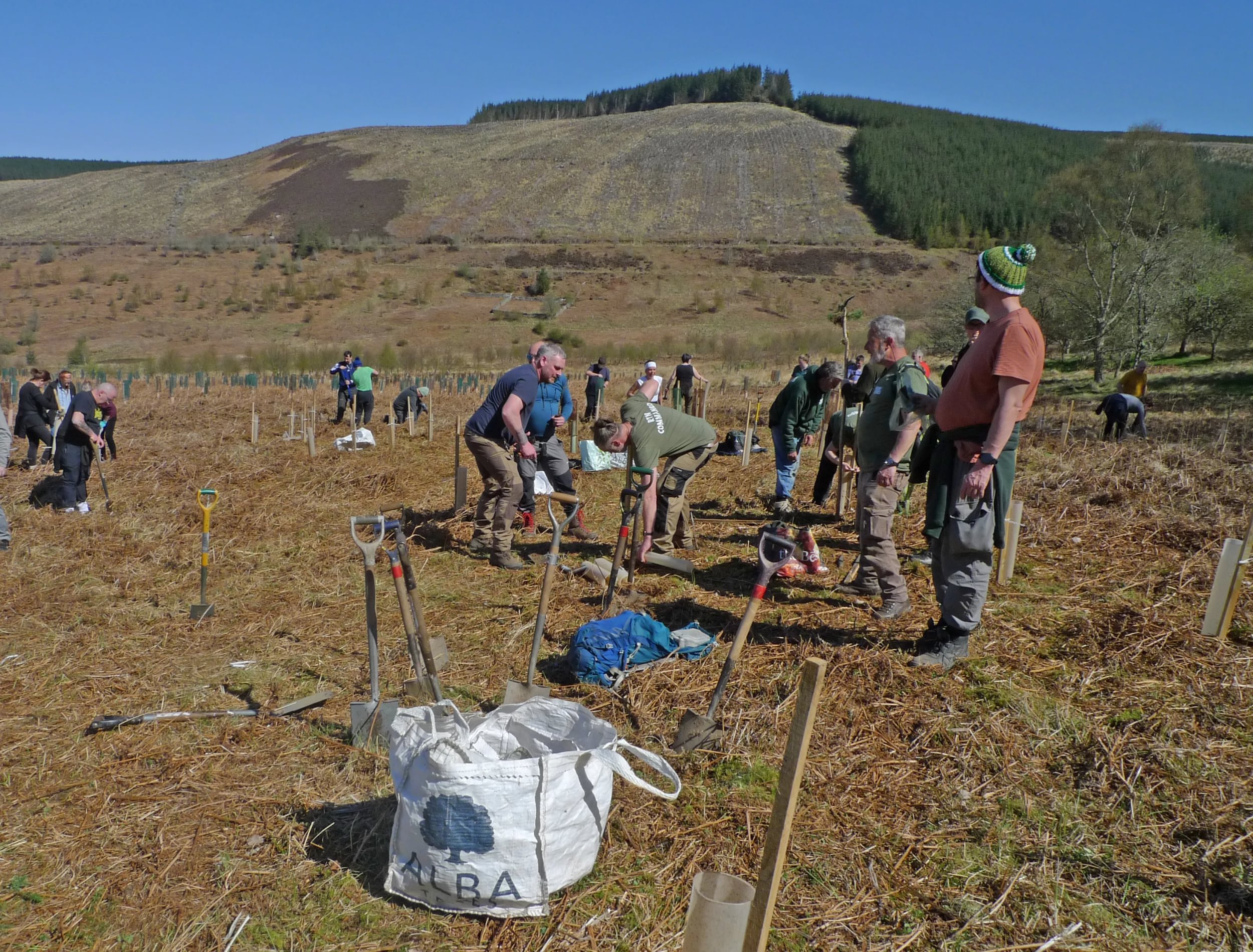
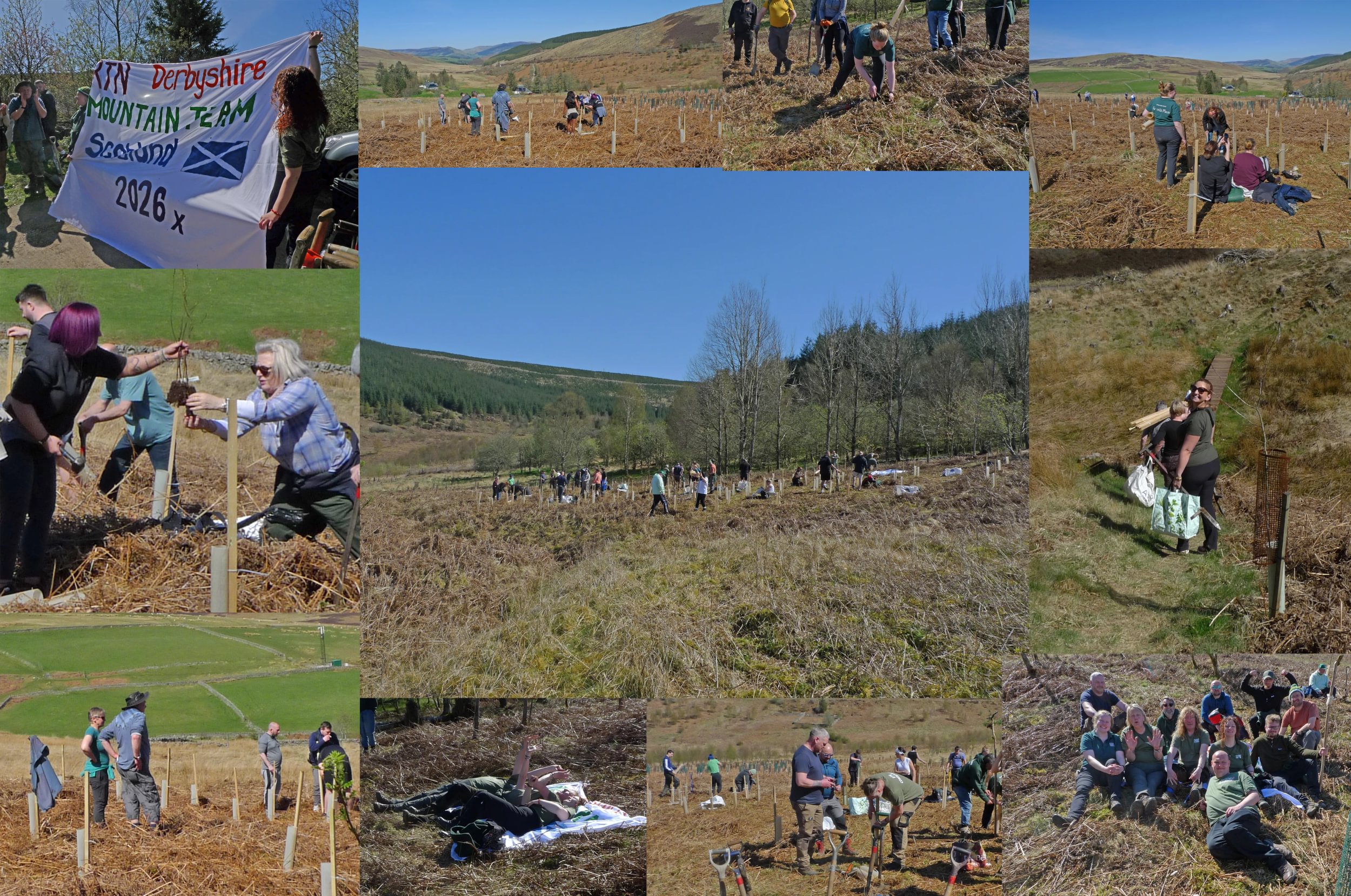
On a bright spring day at Glenlude in the Scottish Borders, 80 people travelled from across Scotland and England to plant trees, share stories, and celebrate something deeply personal: recovery.
The annual planting day, delivered through the John Muir Trust’s long-standing partnership with Phoenix Futures’ Recovery Through Nature (RTN) programme, marks an important milestone for participants completing recovery journeys linked to drug and alcohol support services.
But this is about much more than planting trees. For many attending, it is about connection, confidence, purpose, and discovering the restorative power of wild places.
The partnership was recently recognised nationally, winning the Health and Wellbeing Award at the 2025 Nature of Scotland Awards for its Recovery Through Nature in the Phoenix Forest programme at Glenlude.
For more than a decade, the programme has brought participants from Phoenix Futures services across Scotland and England to the John Muir Trust’s Glenlude property in the Scottish Borders, where they help restore habitats and expand native woodland.
Over the past 13 years, almost 300 trees have been planted through the partnership – and each tree represents one person’s recovery journey.
The project also plays a vital role in the Trust’s long-term vision for Glenlude, where staff and volunteers are gradually transforming a former conifer plantation into a thriving mosaic of native woodland, peatland and upland habitats.
Thriving young woodland
The trees planted at Glenlude are grown from locally collected seed in the site’s tree nursery. Trees planted in the early years are now producing seed themselves, helping natural regeneration processes take hold across the landscape.
Karen Purvis, Property Manager at Glenlude, said:
“What was initially a stark, bare hillside is now a thriving young woodland that is producing seed, taking on a shape of its own and becoming increasingly biodiverse.
“This would not have been possible without the hard work and dedication of the Phoenix family.”
Karen Biggs, CEO of Phoenix Futures, said:
“Many participants report that Recovery Through Nature kept them in treatment, kept them engaged and motivated. Partnerships help make that possible, and our longest partnership is with the John Muir Trust.
“People often struggle to access truly wild outdoor spaces. Experiencing places like teh Trust’s Glenlude is something many people never imagined they’d have the chance to do.”
Thriving partnership
Phoenix Futures first began exploring the relationship between nature and recovery over 25 years ago, when Jon Hall, Environmental Sustainability Manager, started developing approaches that brought people in residential recovery services into outdoor environments.
Today, RTN programmes run from Aberdeenshire to Essex, helping people reconnect with themselves and the natural world through conservation, outdoor learning and shared experiences in nature.
Jon Hall, Environmental Sustainability Manager said:
“The ever-growing partnership between the John Muir Trust and Phoenix Futures gives us the opportunity to bring people together for a wonderful day and celebrate recovery in truly beautiful surroundings, whilst making a genuine impact on the conservation of an important wild place and its habitat. The process of caring for Glenlude is as enriching for those who visit and volunteer as it is for the land.”
Thriving recovery in a wild place
For Hugh Asher, Recovery Through Nature Lead in Aberdeenshire, nature offers something unique alongside traditional recovery support.
“Nature is the therapist — let nature work its magic,” he said.
“There are so many benefits to noticing, appreciating and getting outside. It helps reduce stress, regulate emotions and reconnect people with themselves. Even in a city, we can find nature.”
Participants spoke openly about the impact the programme has had on their lives.
Joshua Blair, from Midlothian, described the outdoors as “very therapeutic” after experiencing repeated cycles of recovery and relapse before joining Phoenix Futures.
Aaron Rennie, from Glasgow’s east end, said the programme had been “life changing” and inspired him to consider a future career outdoors in forestry or conservation.
Kimberly Marshall, from Derbyshire, joined RTN after six months in recovery and said she had “found her wee community”.
“Planting trees felt like planting a new life,” she said.
“After everything I’ve been through, to come through the other side and find these people and this group - it reminds me of what I’ve got ahead of me.”
Volunteer Jill Nelson described the Glenlude planting day as one of the most meaningful moments of the year.
“Every tree represents one person’s recovery,” she said.
“I absolutely adore the John Muir Trust’s Glenlude site and team. It’s such a beautiful way to celebrate each other.”
For the John Muir Trust, the partnership reflects the wider purpose behind protecting and restoring wild places.
Wendy Grindle, Director of Communications, Engagement and Marketing at the John Muir Trust, said:
“Wild places don’t just benefit nature - they can have a profound impact on people too.
“Programmes like Recovery Through Nature show what happens when people are given the space, support and confidence to reconnect with nature, with other people, and with themselves.
“This partnership beautifully reflects what the John Muir Trust exists to do: protect wild places and help people experience them.”
As the remaining trees were planted across the Glenlude hillside, the message from the day felt clear: recovery, like restoration, takes time, care, and hope. But both can grow into something extraordinary.
- Find out more about Glenlude.
Related News
28 Sep 2026
A grand day out at Glenlude
15 Sep 2026
The path ahead for the John Muir Way