Field Notes: A week with the Nevis team
Trust fundraiser Liv Adams gains valuable hands-on experience learning about habitat monitoring, peatland restoration and path maintenance from our team at Glen Nevis.
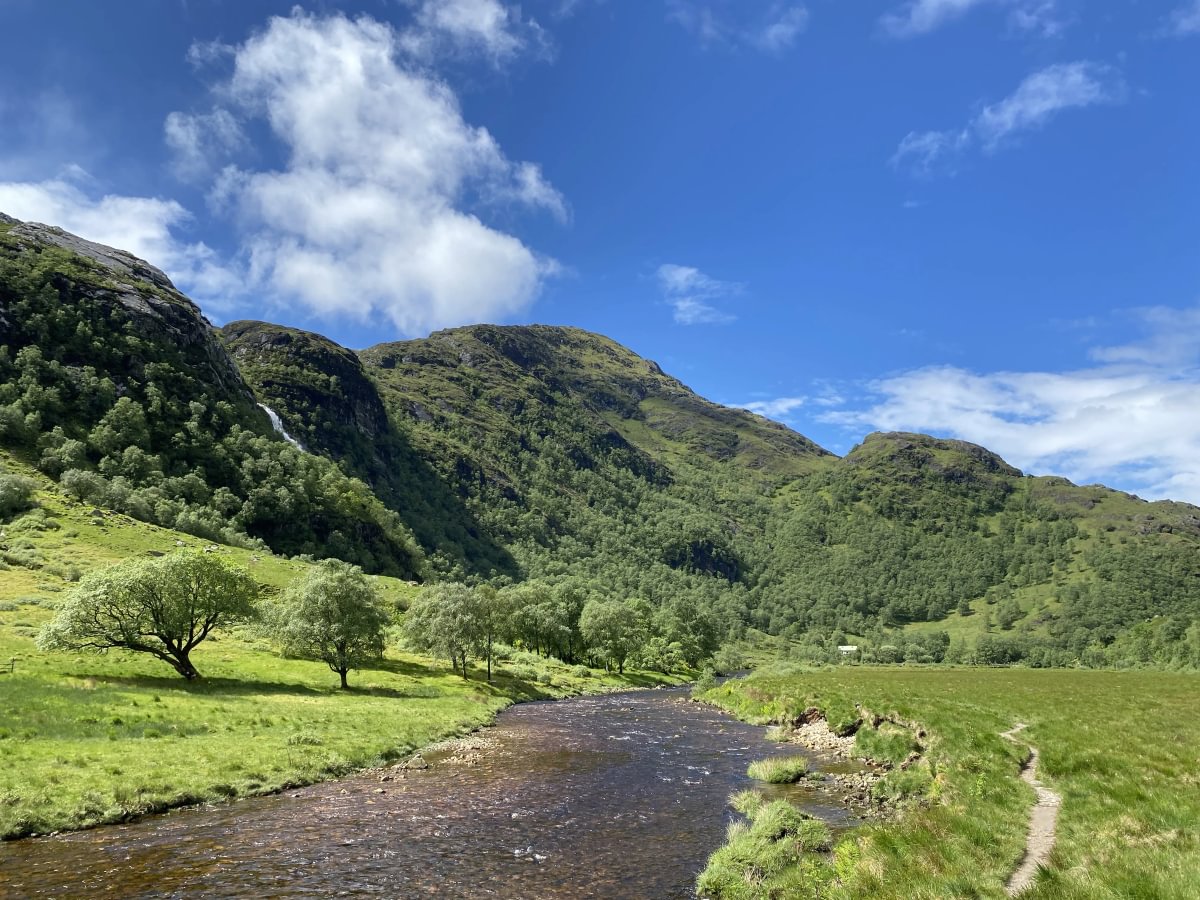
Last month I was lucky enough to spend some time working closely with the Nevis team. Conservation officer Julia Robertson and Property Manager Steph McKenna kindly let me join them for a week, so I could experience first-hand how our land management goes beyond the boundaries of the land we care for.
Through a combination of ecological monitoring, with adaptive management and collaboration with our neighbouring estates and local partners, the team is helping to protect wild upland habitats; support wildlife; and care for a landscape that benefits both nature and the far-reaching community of people who visit the gorge and Ben each year.
This was my first time visiting Steall Gorge and our team, who both grew up in and around Nevis and the surrounding highlands, were delighted to show me around.
Habitat monitoring
On my first day, Julia and I meandered through the lush Atlantic rainforest, making our way through the gorge and then up the hill beside Aonach Beag to survey the Trust’s blanket bog plot sites.
We collected data on grazing and habitat condition using a Herbivore Impact Assessment, which took me back to my university days of scrambling to pencil in counts and species’ names, while fighting off midges and torrential rain.
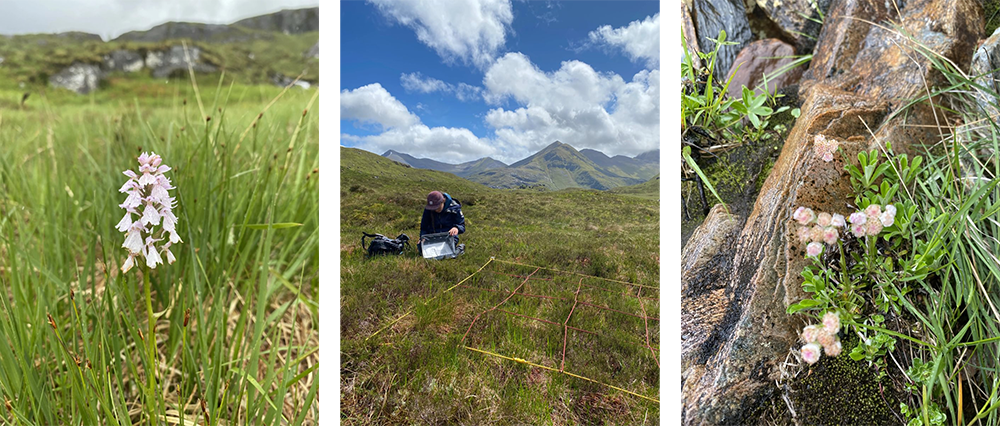
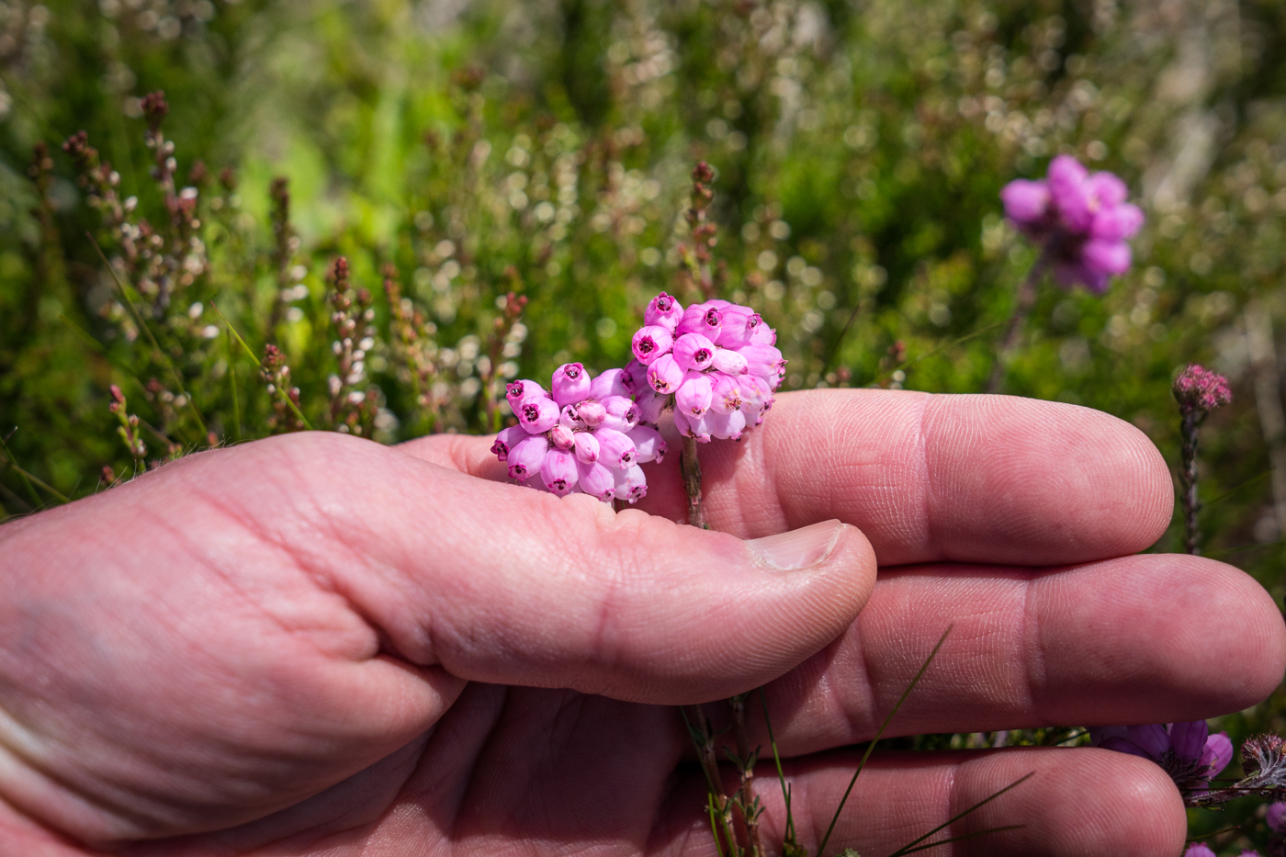
Of note, we found cotton grass, sundew, tormentil, ling heather, cross-leaved heath and cladonia. We were also lucky enough to record some mountain everlasting (pictured above right) - a hardy perennial plant that is able to survive harsh mountain conditions.
This survey is something that Julia does every year in the spring/early summer, when vegetation is easier to identify and grazing impact can be more easily assessed, which in turn informs our future management of the site.
Peatland restoration
On day two, we were joined by colleagues from the Trust’s wider land team. The six of us walked into the gorge, past Sgurr a’ Bhuic and through to the eastern edge of the Trust’s boundary. Our mission was to assess our peatland restoration sites and brainstorm ideas for their future management.
The restoration project started in 2022 and involved installing dams to raise the water table. It is hoped this will help to rewet and revegetate the surrounding landscape, restoring it to its natural state and supporting wider biodiversity through the creation of bog pool systems.
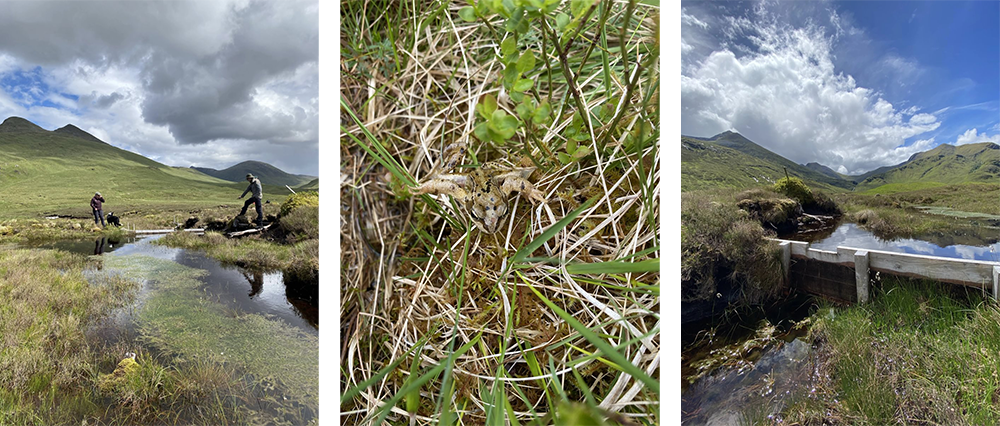
The project involved installing coire logs, stone dams and wooden leaky dams to help create pools across the 40-hectare site. These important ecosystems function not only as an essential carbon store, but also as crucial breeding habitats for a range of invertebrates. It was breathtaking to see the number of dragonflies already flourishing there in early summer.
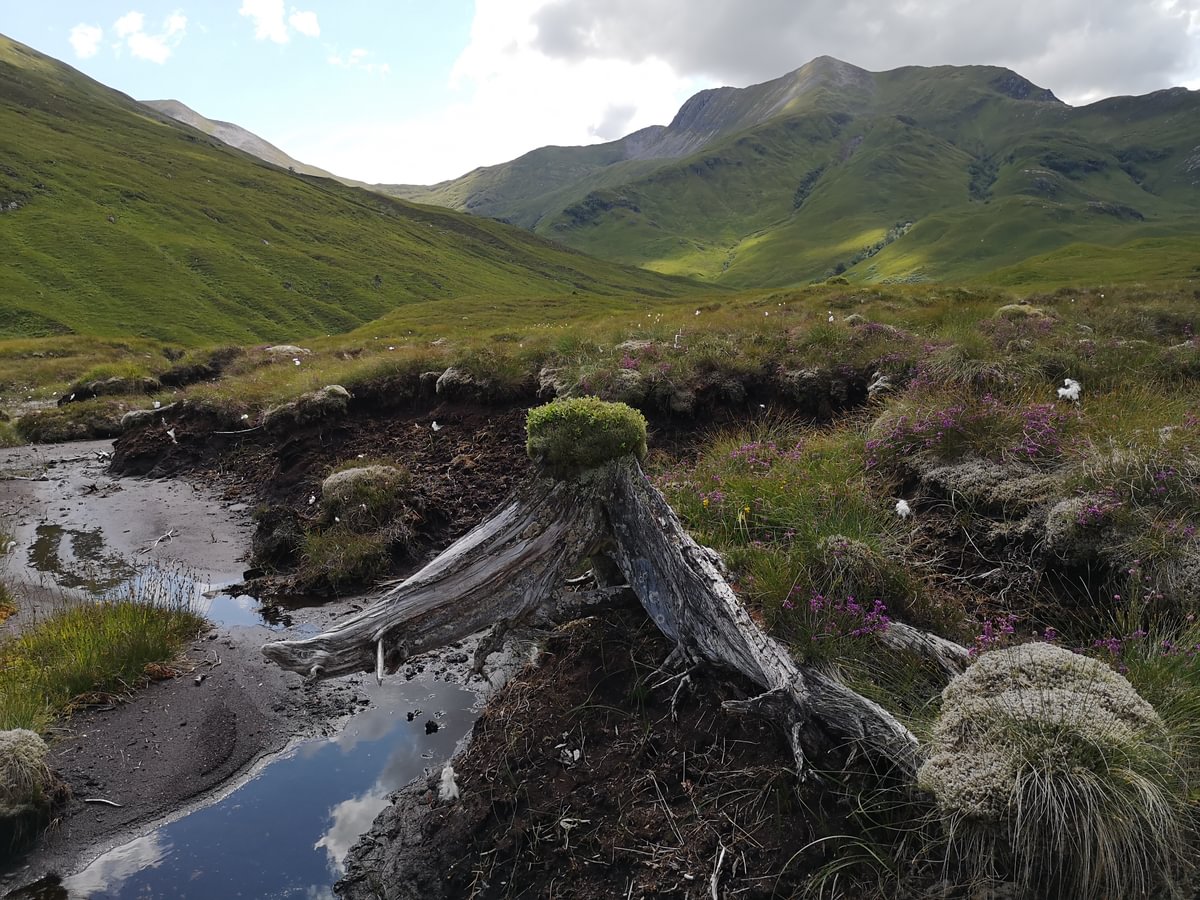
One of the highlights was walking past a five-thousand-year-old dead tree trunk left behind after the last glacial period. The relic, which had been preserved under the peat’s anaerobic conditions and kept from decomposing, stood out in the terrain.
It was a fascinating reminder of how this landscape has been formed, shaped and reshaped over millennia. Just like the soil, the water, the peat, the rocks, the flora and the fauna, the ecosystem itself took thousands of years to take shape and create webs of life we see within it today. It was a valuable reminder of how important the Trust’s role is here, in protecting habitats and monitoring our progress as we look to the future.
Path maintenance
On my final days in Nevis, I got stuck into some path maintenance tasks along the Steall path, clearing cross drains and channels to prevent erosion and help run-off drain into the landscape.
As rewarding as it was to spend time in the field, what I'll take away most from the week was the opportunity to learn from colleagues whose knowledge, care and commitment to this landscape are evident in everything they do.
Opportunities to step outside our day-to-day roles, pick up knowledge and experience in other teams and share skills directly with one another help us all better understand the places we're working to protect.
- Find out more about our work at Nevis.
- Please get in touch if you'd like to discuss any of our upcoming projects on Nevis and/or how a major contribution can support the continuation of our projects.
Photograph at the top shows land in the care of John Muir Trust and our neighbours Jahama.
Help us care for wild places in 2026
Support our vital work to protect wild places like Ben Nevis and Glen Nevis
Related News
18 Sep 2026
Volunteers in action
15 Sep 2026
The path ahead for the John Muir Way