Making a difference at Glenlude
Fresh from recognition in the recent Nature of Scotland Awards, the Trust’s Glenlude team are looking ahead to another busy year of bringing people and nature together, writes Rich Rowe.
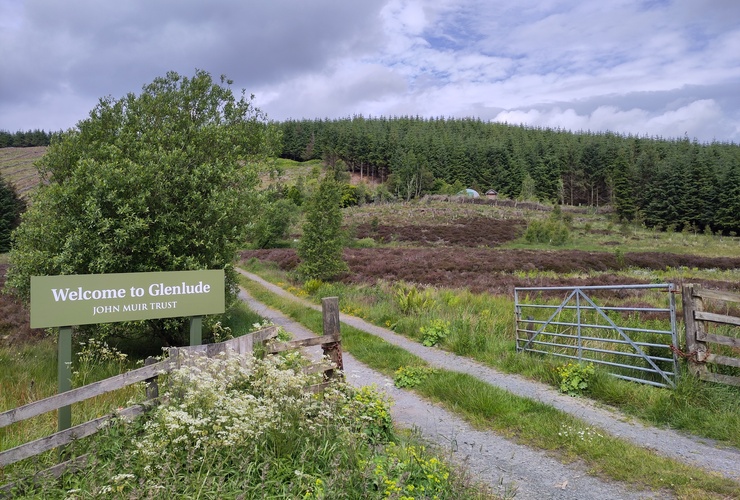
Warming themselves beside the giant, pot-bellied stove in the volunteer hut at Glenlude, the flames dancing in the late-winter gloom, Karen Purvis and Ellie Oakley are clearly itching to get started on a new season. They will do so on the back of industry recognition that has raised the profile of this understated but hugely impressive site in the Scottish Borders like never before.
Much like the fire before them, both Glenlude Manager Karen and Conservation Officer Ellie are still glowing from memories of a special night in Edinburgh last November when they collected the 2025 Nature of Scotland Health and Wellbeing Award for their long-running partnership work with the drug and alcohol rehabilitation charity, Phoenix Futures.
Glasgow-based but operational UK-wide, Phoenix Futures uses Glenlude as a key site for its Recovery through Nature (RtN) programme: a therapeutic intervention that sees groups engage in practical conservation and outdoor tasks and which has yielded a dramatic improvement in successful treatment completion rates for those regularly involved.
While the outdoors is an alien place for many of the participants, the value of being outside doing this kind of work has proved immensely powerful. “Therapy by stealth” is how Phoenix Futures’ Jon Hall, who has been involved with the programme from the start, refers to it.
“We were at the awards ceremony with Jon and a cross section of the Phoenix team, including people who have been through the programme, and sat in stunned silence when our names were read out,” says Karen.
“Hearing about all the other incredible projects in the same room made us realise that we are doing something really good here.”
Early beginings
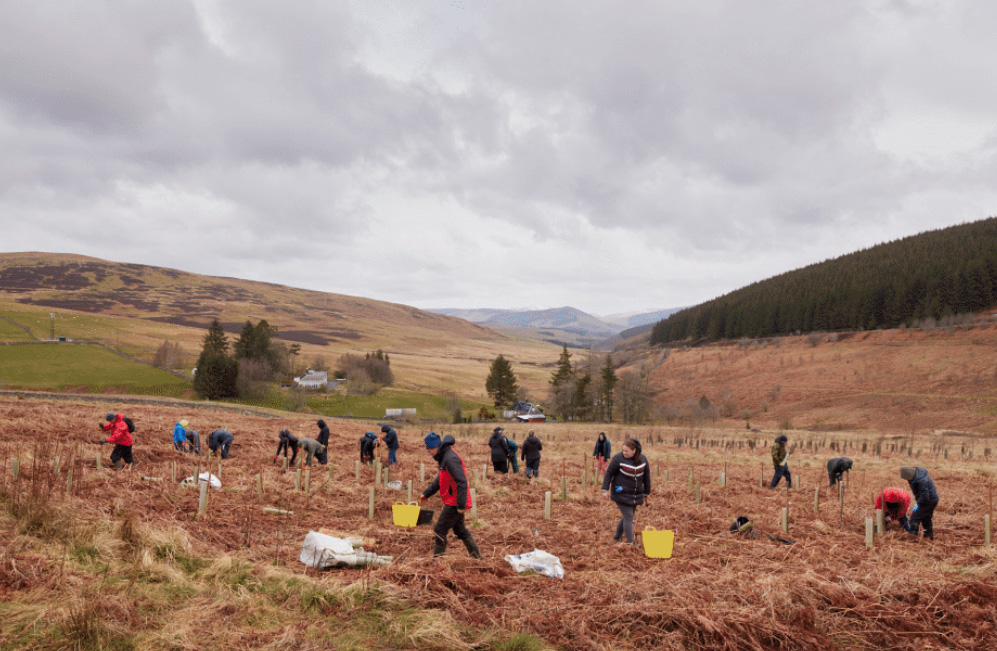
Phoenix Futures approached the Trust in 2012 when first searching for a suitable site to create a celebratory woodland in Scotland – one that would play host to what has become an annual tree-planting event to mark participants’ successful completion of the RtN programme.
Karen, who has overseen Glenlude since the same year, remembers those initial conversations well. “We offered them two areas, one up on the hill out of sight and another right by the roadside that was overgrown with bracken at the time,” she recalls.
They chose to be seen – with what has now become the well-established ‘Phoenix Forest’ beginning with the building of a simple brash hedge with native trees planted inside. “One of the people involved in those plantings went on to become a ranger, which really set the tone,” says Karen. “There are so many individual stories, many of them genuinely life-changing.”
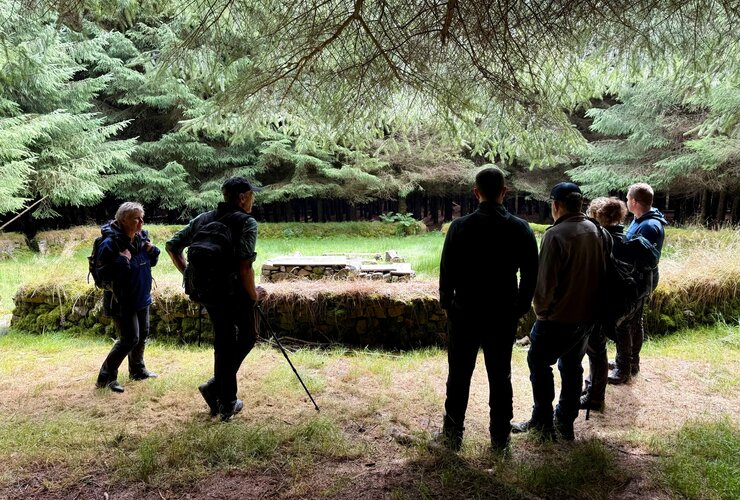
While the annual tree-planting event continues, Phoenix Futures bring groups to Glenlude throughout the year. Last year alone saw teams come from Derbyshire, North Ayrshire, North Lanarkshire, Glasgow, Fife and Aberdeenshire.
Over time, the expansion of this forest has transformed the hillside into a fully functioning woodland where a vibrant mix of lichen-encrusted birch, hazel, rowan, hawthorn and oak stand as proud as the participants who planted them. And, as intended, it is visible to all who travel over Paddy Slacks, the local name given to the road that climbs past Glenlude linking the Tweed and Yarrow valleys.
Slow and steady
The work with Phoenix Futures speaks to the very heart of what Glenlude is about: a safe place where people can build a deeper connection with nature – and especially those who may not otherwise have access to such areas.
This burgeoning expanse of forest has also contributed greatly to a wider effort to turn a former sheep farm and conifer plantation into a rich mosaic of native habitats.
When the Trust first inherited Glenlude with its stands of single-age Sitka spruce and larch back in 2004, the temptation might have been to fell the whole lot in one go, but that would have just created a native plantation rather than a natural, layered woodland structure.
Instead, Karen and the Glenlude team have taken a deliberately gradual approach that has allowed nature to grow in tune with the fledgling forest. With staggered planting over time, Glenlude is now home to a multi-age set up, with mature alder, birch and more producing seed – a positive sign that the woodland is beginning to regenerate by itself.
“Throughout the site, we are kickstarting natural processes with areas of younger woodland coming through,” explains Karen. “This gentler approach takes longer but fits with our goal of including volunteers and groups in every aspect of what we do.”
Today, the Phoenix Forest connects with mature woodland planted in 1995 and Jamie’s Wood – another specially dedicated area at Glenlude – to create around 22ha of continuous native woodland. Crucially, there now exists the mosaic of ages, densities, open glades and deadwood that are such essential components of a healthy woodland ecosystem.
All in the mix
In addition to group visits from core partners such as Phoenix Futures, the Trust works with many other community, volunteer and school groups – with a total of 315 volunteer workdays at Glenlude in 2025.
“It’s important to recognise the input of all these people because, without them, we just wouldn’t achieve so much,” notes Ellie, who joined the Trust in February 2025 and now oversees the engagement side of work at Glenlude.
Last year saw the Green Team – a charity dedicated to connecting young people with nature – celebrate its 30th anniversary on site, with participants planting more than 200 trees. The regular Thursday conservation volunteers also got through a mountain of work, tackling tree maintenance, processing firewood, brash hedging and assisting with ecological survey work.
“You’ve got to pick your groups and allocate the tasks accordingly but when you’ve got a squad of enthusiastic people, it’s amazing how much timber can be moved, how much hedge can be created and how much ground can be cleared,” says Ellie.
Volunteers also flexed their creative muscles, renovating a section of wooden steps leading to the volunteer hut and also building a sturdy stretch of boardwalk that protects an area of wetland habitat and makes access to the Phoenix Forest easier.
While many volunteers are retired and have been Trust members for decades, there is also a younger demographic coming through. “Often they are people looking for hands-on experiences as they explore a career change,” notes Karen.
Younger still are the school groups that come to Glenlude and are now returning following a post-Covid lull. This spring sees the start of the second programme of visits for students from Portobello High School in Edinburgh.
“Last year, the school put together an educational treasure hunt followed by a night at our campsite,” explains Ellie. “For many, it was a first experience of being around a campfire. This year, the school has created a similar experience for the entire S2 year group.”
But perhaps most exciting of all is the planned launch of a Junior Rangers programme at Glenlude that will mirror the excellent work done together with pupils from high schools close to the Trust’s properties at Nevis and Quinag further north.
With a structured approach guided by the Scottish Countryside Ranger Association’s Junior Ranger Award, the initiative sees young people develop skills that will prepare them for working in the outdoors or as a ranger in the future. “We are speaking with several high schools close to Glenlude and will run a pilot, eight-week programme starting after the summer holidays,” explains Ellie.
Ecological health
All of this work on the ground has translated into a growing picture of ecological health at Glenlude – a far cry from the days of dreary, light-starved conifer stands and heavily-grazed open ground.
Since 2012, an annual programme of monitoring has included comprehensive breeding bird surveys that provide detailed insight into population trends and the impact of habitat management work. Early morning surveys are conducted along set transects twice a year – one in spring, one in summer – with sightings of mammals and other key observations recorded to build a broader picture of what’s happening in different areas.
The breeding bird survey results have been especially encouraging, with significant increases in the number of individual birds and variety of species – with 42 different species recorded in 2025, up from 29 in 2014.
The findings include some real standouts. Numbers of lesser redpolls, a red-listed species due to habitat loss, have leapt from a single individual in 2014 to more than 219 in 2024. This is thought to be, in part, due to the availability of seeds from regenerating birch and alder.
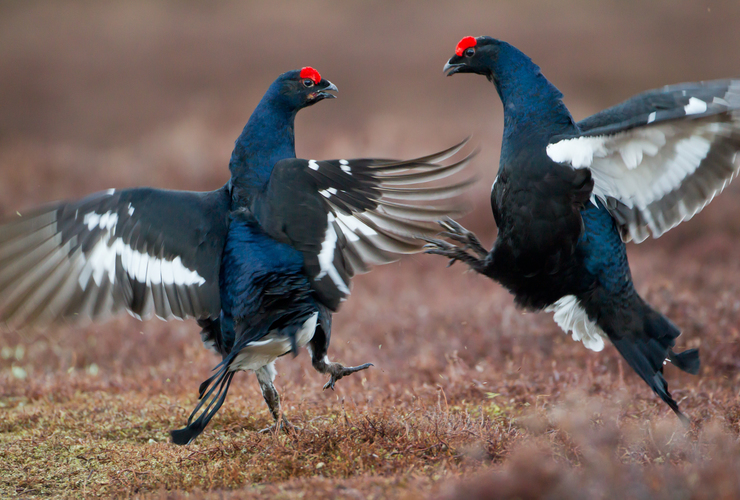
Other species showing marked increases include blackcaps, goldcrests, willow warblers, siskins, skylarks and crossbills, while jays have been spotted stashing acorns. There has also been an exciting growth in numbers of black grouse, a bird that has really struggled in the Scottish Borders. Until recently, numbers had held steady at around four lekking males but in 2025 that number doubled to eight.
“We work closely with the RSPB who have noted how pleased they are with the available habitat for black grouse,” notes Ellie. “They were especially impressed with how the site supports the birds through every life stage, from a hatch of insects when young to good cover when older.”
And it seems that it’s not just birds that are thriving at Glenlude. Adder numbers are strong and stable, while butterfly monitoring in 2025 revealed the presence of several species – brimstone, large skipper and green hairstreak – not previously recorded on the site.
As part of a Borders-wide project, the Trust has partnered with the charity Butterfly Conservation to monitor and support a variety of butterflies and moths. This work has already seen volunteers plant rock rose plug plants, the larval food of northern brown argus, into existing patches at Glenlude. “We’re hoping this will benefit not only northern brown argus, but a whole variety of other species,” says Ellie.
Continued momentum
With such a positive 2025 behind them, capped by a prestigious award, Karen and Ellie know the importance of momentum. With Ellie managing the engagement side of their work, Karen is now reviewing not just the management plan for this year but also the Long-Term Forest Plan for the next 30 years – a period in which the site will continue its transformation.
In the short to medium term, this will involve the continued felling of the site’s remaining 35ha or so of spruce. “As more spruce comes down and more open areas are created, we’ll pull back from planting trees and just let the natural seed source do its work,” explains Karen.
The ambition is also to construct what Karen calls a Gathering Shelter – an accessible, open-air classroom that will help supercharge the Trust’s engagement and educational offer at Glenlude.
“Not everyone can go up the hill and plant trees or make brash hedges,” she explains. “This facility will help expand what we are able to do with an even wider range of people, including doing even more on the therapy side.”
It will be one more valuable addition to a site that may have flown a little under the radar in the past but which has now gained national recognition for its thoughtful, nurturing treatment of people and nature.
- Further information: Glenlude is located just south of Innerleithen in the Scottish Borders, on the edge of the Southern Uplands. Easily accessible, it is within two hours travel distance from Glasgow, Edinburgh and much of the north of England.
- This article first appeared in the Spring / Summer 2026 edition of the John Muir Trust Members' Journal. If you would like to receive our Journal twice a year please consider joining the Trust as a Member.
Related News

5 Oct 2026
Interview with Professor Ria Dunkley
28 Sep 2026
A grand day out at Glenlude