A Trustee's view on making wild
Trust Members have been invited to take part in the Trustee Election, which closes at 12.30pm on Thursday 13 August 2026. As the deadline approaches, we hear from one of our current Trustees - Dominick Spracklen - who reflects on the many benefits of returning nature and natural processes to our uplands.
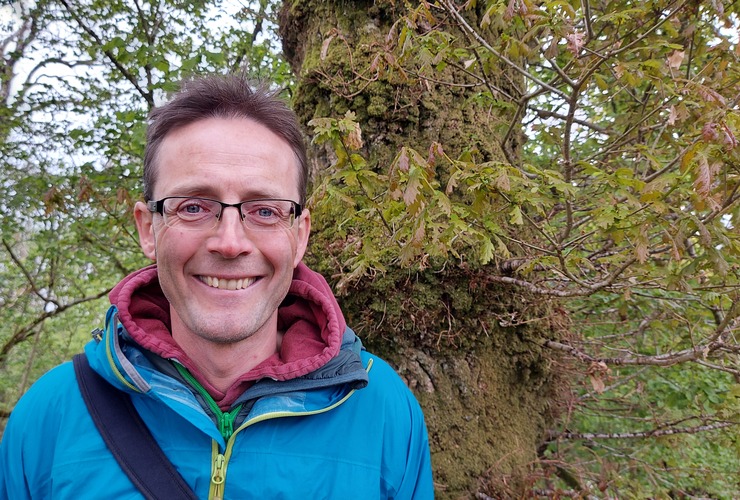
^ On the eve of our 2026 Trustee election, we share an article by current Trustee Dominick Spracklen on 'making wild'. Members of the Trust have been contacted and invited to vote to fill four vacancies on our Board of Trustees before 12.30pm on Thursday 13 August 2026.
Remote, but is it wild?
I’m high up in a valley surrounded by hills. I can’t see anything man-made and I haven’t met anyone for hours. It’s quiet, except for the wind whistling around the rocks and the tumbling gurgle of a mountain stream. I’m miles from the nearest road and even further from the closest village. It feels very remote.
But is it really wild? The grassy slopes are almost bereft of flowers. Even heather and bilberry – which should be everywhere – cling only to the steepest, craggy ledges. There are no trees or shrubs to be seen. The last ones I passed – far down in the valley below – were a plantation of Sitka spruce and Lodgepole pine. I haven’t seen many birds either, just the occasional meadow pipit.
I’m in England’s Lake District but it could be many different corries in Scotland. Swap corrie for cwm and I could be in many places in Wales.
This loss of nature from our hills is well documented and makes our mountain experiences much poorer. I feel that loss deeply. To me, a place cannot truly be wild if many of the plants, flowers, trees, birds and animals that should be there are missing.
From water voles to black grouse, and dwarf birch to golden eagles, the list of species missing from the Lake District is depressingly long. But beyond our own experience of the hills, does it matter that so many species are gone?
John Muir believed it did, writing: “When we try to pick out anything by itself, we find it hitched to everything else in the Universe”.
As a researcher at the University of Leeds, much of my career has been spent trying to understand these connections and the wide range of benefits that nature provides. In recent years we have been studying how native woodlands change the way water flows across the land, and whether this alters downstream flood risk.
Felicity Monger, a PhD student at Leeds, measured soil properties in surviving fragments of native woodland at Haweswater in the Lake District. She found that woodland soils soaked up water ten times faster than nearby grassland soils. The diverse ground vegetation in these woodlands also slowed the movement of water across the slope.
Together, these effects meant that flood peaks in woodland streams were up to 60% lower than in comparable grassland streams. Restoring more native woodlands to our hills could therefore play an important role in reducing flooding downstream.
Woodland restoration can also help tackle climate change. Research assistant Tasmin Flecher found that restoring native woodlands more widely across Scotland could store seven million tonnes of carbon dioxide every year.
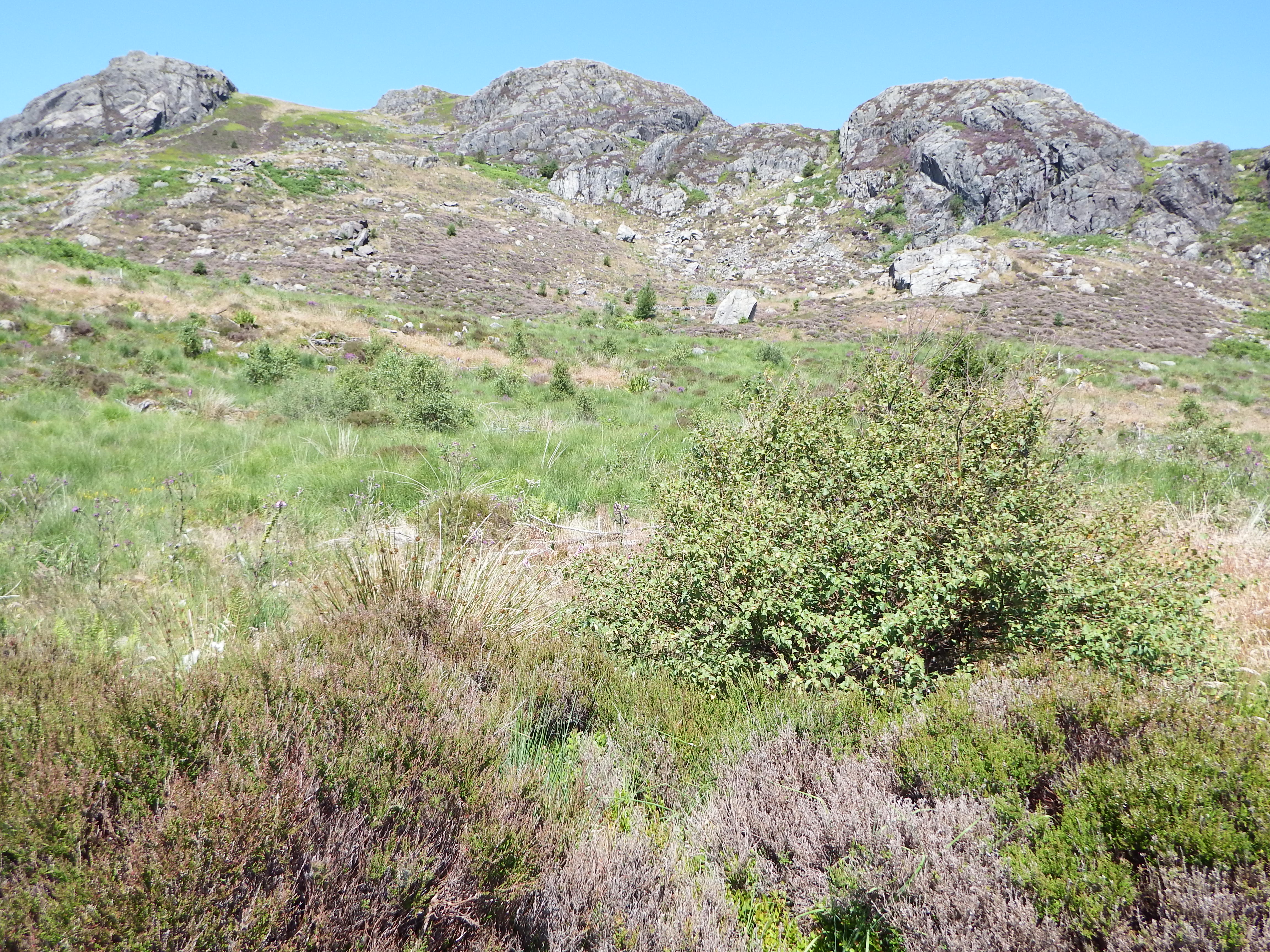
^ Natural regeneration at the Restoring Hardknott Forest site in the Lake District.
Stepping back
So how can we restore nature to our hills? In some places, just giving nature space is enough. One example I am particularly proud of is the university’s Restoring Hardknott Forest project in the Lake District, where we are working with Forestry England to restore a 630ha plantation to native woodland. With poor access for timber lorries, it is not a good place for commercial forestry. But it is a perfect place to let nature return.
After the plantation was felled, volunteers – including many from the John Muir Trust – worked hard to weed out the resprouting non-native conifers. Then we stepped back and let nature take over. Willow, birch and rowan were the first trees to appear, and the most numerous. Our monitoring found more than 3,000 naturally regenerating trees per hectare – similar to the densities that would normally be planted when creating a new woodland.
This new cover was also remarkably diverse. In total we recorded 13 native tree species, including oak, alder, holly and juniper. The woodland soon attracted other wildlife. Matthew Webb, a summer research assistant, placed sound sensors in areas of regenerating woodland and nearby areas of grassland. He recorded twice as many bird calls in the new woodland.
Naturally regenerating woodlands are often beautifully varied. In some places, trees grow thickly; in others they are scattered and open. And in some places, no trees grow at all, leaving glades and open spaces. We wanted to understand what drives this diversity.
Research by Cesca Darvill, another PhD student at Leeds, suggests the answer lies in the soil. Working amongst the amazing natural regeneration at the National Trust of Scotland’s Mar Lodge estate in the Cairngorms, she analysed soil properties at varying distances from naturally regenerating Scots pine trees. Trees established readily on drier soils, but were much less common on wet, peaty soils.
Crucially, she found that trees tended to colonise low-carbon soils, while avoiding wetter soils rich in stored carbon. This is important as it means the new trees are likely to store more carbon without damaging existing carbon stored in the soil.
Helping hand
In many places, however, we find that we will need to do more than simply step back – we may need to give nature a helping hand. In parts of the uplands, so few trees remain that natural regeneration is no longer possible. In such places, planting trees may be necessary to restore woodland.
Our work at the University of Leeds shows that with careful planning – such as the Woodland Trust’s Snaizeholme project in North Yorkshire – we can emulate natural processes by planting trees on lower-carbon soils while leaving carbon-rich soils unplanted.
Working with farmers who manage the land will also be essential. In some places this may mean reducing the intensity of farming and finding the right balance of grazing to help vegetation recover. In other places it could involve moving to more mixed grazing systems, including hardy native cattle breeds.
In the Yorkshire Dales, our research found that where farmers had switched from sheep to cattle grazing, plant diversity increased by 40%. The response from butterflies was even more dramatic: we counted five times as many butterflies on cattle-grazed grasslands compared with sheep-grazed ones. Farming in a slightly gentler way can lead to big gains for nature.
Encouragingly, more and more farmers are working to restore nature alongside producing food. And across Scotland, a growing number of estates are managing the land in ways that help nature recover.
Bringing back nature will bring a host of benefits, from reduced flooding to storing more carbon. And I think it will make our hills feel wilder too.
- Dominick is a member of the Trust's Board of Trustees. In 2026 we have have four vacancies for three-year terms. Members of the Trust have been contacted and invited to vote in our Trustee election before it closes at 12.30pm on Thursday 13 August 2026.
- This article first appeared in the Spring / Summer 2026 edition of the John Muir Trust Members' Journal. If you would like to receive our Journal twice a year please consider joining the Trust as a Member.
Related News
28 Sep 2026
A grand day out at Glenlude
15 Sep 2026
The path ahead for the John Muir Way