Visitor pressure at Sandwood
Few places in Scotland capture the imagination quite like Sandwood Bay. A quick online search reveals countless glowing reviews, dramatic photographs and enthusiastic recommendations from walkers who have made the journey to this remarkable stretch of coastline. Frequently described as one of the most beautiful beaches in the UK, Sandwood Bay is a place that leaves a lasting impression on all who visit.
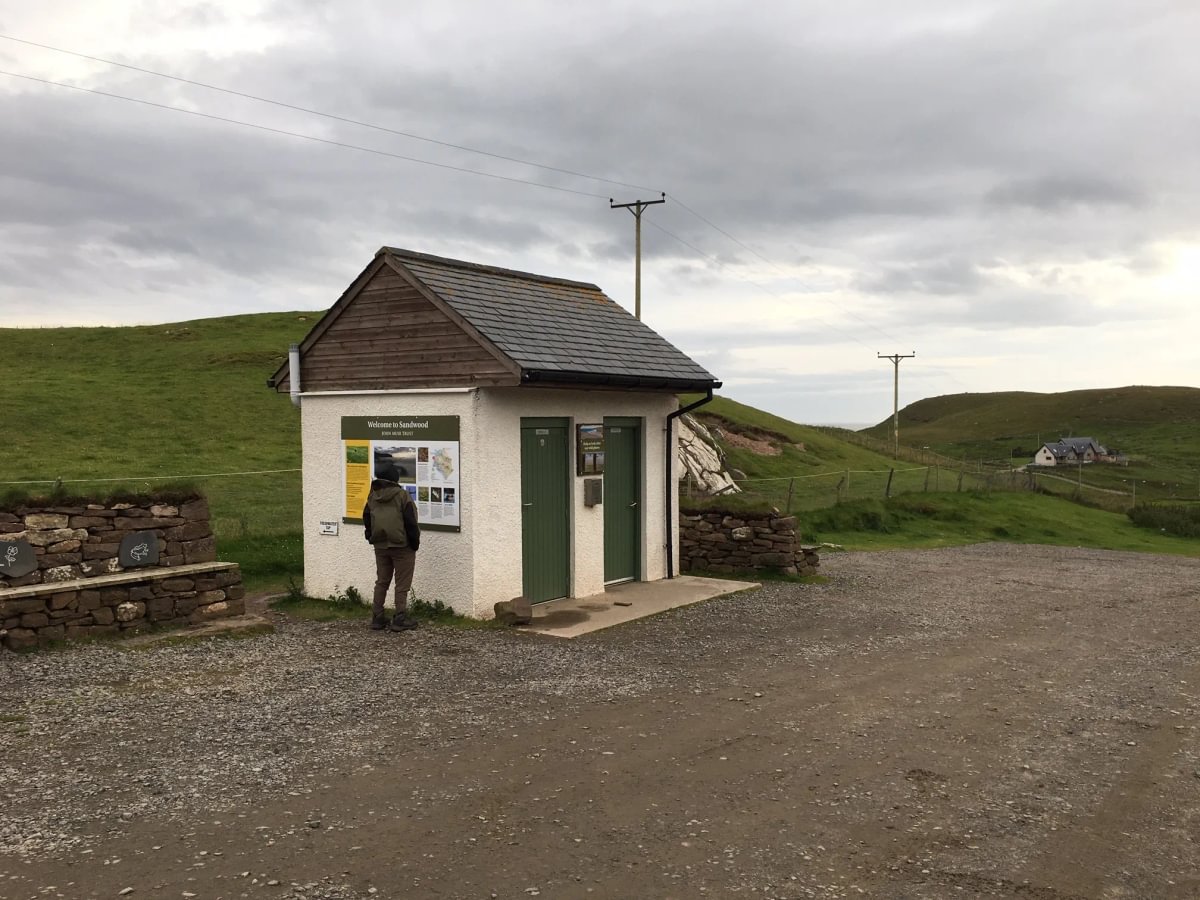 Its growing reputation has brought increasing numbers of visitors to the area in recent years. While this rise in popularity reflects a growing appreciation of Scotland’s natural heritage, it has also placed greater pressure on the infrastructure needed to support visitors and protect the landscape. Now, thanks to funding from the Scottish Government’s Rural Tourism Infrastructure Fund (RTIF), the John Muir Trust is developing plans to ensure Sandwood remains both accessible and protected for future generations.
A landscape of international significance
Sandwood Bay is the jewel in the crown of the John Muir Trust’s 4,703-hectare Sandwood estate, located just a few miles from Cape Wrath on Scotland’s north-west coast. Widely regarded as one of the country’s most remote beaches, it combines dramatic scenery with a sense of isolation that has become increasingly rare.
As one recent visitor described it: “Sandwood Bay is the most magnificent beach in the UK. It offers nearly a mile and a half of wide pinkish sand backed by huge sand dunes and a loch, and is flanked by cliffs and an impressive sea stack. It faces north-west, straight into the teeth of the worst the North Atlantic can throw at it. For sheer majesty and grandeur, there is simply nowhere that can beat Sandwood Bay.”
The wider estate is equally important. Alongside the bay itself, the landscape includes eight offshore islands, a saltwater lagoon and a freshwater loch. Much of the area lies within a Special Area of Conservation (SAC), a designation that recognises its exceptional environmental value and affords it the highest level of protection under European legislation. The site is also designated as a Site of Special Scientific Interest (SSSI), reflecting the importance of its dune grasslands, shifting dune systems and machair habitats.
These designations underline both the environmental significance of Sandwood and the responsibility to ensure it is carefully managed.
Protecting a special place
The John Muir Trust plays a central role in caring for the estate, including the maintenance of a four-mile path that leads from Blairmore to Sandwood Bay. The route crosses exposed moorland and is highly vulnerable to erosion. Harsh weather, soft ground conditions and increasing footfall all contribute to the wear and tear experienced by the path. In some locations, sections can be washed away entirely during periods of heavy rain.
Conservation work extends well beyond path maintenance. Much of the estate remains under crofting tenure, and local crofters continue to manage large parts of the landscape. The Trust works closely with them, alongside other members of the local community, to ensure the area remains healthy and resilient.
This collaborative approach includes wildlife monitoring, deer management and habitat conservation projects. Together, these efforts help safeguard the special wild place qualities that make Sandwood unique while ensuring the landscape can continue to support both wildlife and visitors.
A destination worth the effort
Part of Sandwood Bay’s appeal lies in the fact that reaching it requires commitment. Unlike many popular visitor attractions, there are no roads leading directly to the beach. The only way to reach it is on foot, via the four-mile path from Blairmore. The journey itself has become part of the experience.
One visitor described the route as: “A gruelling four-mile moorland path from the nearest hamlet that keeps casual tourists entirely away, preserving a pristine natural sanctuary where colossal, wind-sculpted pink sand dunes tower over a wide crescent of gleaming white shore.”
The effort required naturally limits visitor numbers and helps preserve the sense of wildness for which the bay is renowned. Most walkers allow around five hours for the return journey, giving them time to enjoy the beach before heading back. Others continue beyond the bay to stay in nearby bothies or camp overnight, meaning vehicles often remain parked for extended periods.
The location has also become increasingly well-known because of its position near the end of the Cape Wrath Trail, one of Britain’s most challenging long-distance routes. Many walkers finishing the trail stop at Sandwood’s car park and use the facilities.
At the same time, the rise of the North Coast 500 has introduced Sandwood to a much wider audience. Since its launch in 2015, the now-famous driving route has generated significant economic benefits across northern Scotland, bringing visitors from around the world to the Highlands and encouraging exploration of some of the country’s most remote landscapes.
Responsible visitors, growing pressure
Despite the increase in visitor numbers, Sandwood has largely avoided many of the issues associated with overtourism. According to Trust staff, visitors to the site are generally respectful and environmentally conscious. The absence of large numbers of signs, barriers and enforcement measures reflects an approach based on education, engagement and fostering a personal connection with the landscape.
John Muir Trust Land Manager John Macrae explains: “We inspire different, responsible and more respectful visitors. They don’t tend to leave litter or light fires. What we’re doing works, because visitors are looking after the site, without us having to post lots of signs.”
However, good visitor behaviour does not eliminate the practical challenges associated with rising visitor numbers.
Even responsible visitors place demands on car parking, toilets, waste management systems and other facilities. As more people choose to experience Sandwood, the existing infrastructure has come under increasing strain. The challenge is not one of managing poor behaviour but of ensuring facilities can accommodate demand while maintaining the character and environmental integrity of this special place.
Tourism growth across Scotland
Sandwood’s experience reflects wider trends across Scotland’s tourism sector. In recent years, Scotland has experienced strong growth in visitor numbers, particularly from overseas markets. International tourism has recovered strongly following the pandemic, supported by improved transport connections, favourable exchange rates and renewed enthusiasm for travel.
The country’s combination of dramatic scenery, rich cultural heritage and world-class events continues to attract visitors from around the globe.
Tourism is one of Scotland’s most significant economic sectors, generating billions of pounds for the economy and supporting hundreds of thousands of jobs. In the Highlands, destinations such as the North Coast 500, whisky distilleries and wildlife tourism experiences have played an increasingly important role in economic growth. But with growth comes responsibility.
Recognising both the opportunities and challenges created by tourism, the Scottish Government’s Scotland Outlook 2030: Responsible Tourism for a Sustainable Future strategy emphasises the need to balance economic benefits with environmental protection and community wellbeing. The strategy highlights how tourism should enrich the lives of both residents and visitors while protecting the landscapes and cultural assets that attract people in the first place.
The rise of responsible travel
Changing visitor expectations are also influencing how destinations are managed.
Increasingly, travellers are seeking experiences that provide a deeper connection with nature, local communities and authentic cultural experiences. There has been growing interest in what is often described as transformational tourism, where travel is seen as an opportunity for personal enrichment rather than simply a leisure activity.
This trend aligns closely with places like Sandwood Bay. Visitors are drawn not by commercial attractions but by opportunities to experience solitude, natural beauty and a meaningful connection with the landscape.
Wellness tourism is another growing trend, driven by interest in mental wellbeing, outdoor recreation and reconnection with nature. Scotland’s coastline, mountains and remote rural environments provide ideal settings for these experiences.
Alongside this, visitors are placing increasing importance on sustainability. Many now actively seek destinations and organisations that demonstrate genuine environmental responsibility through conservation, community engagement and low-carbon infrastructure.
These changing travel patterns reinforce the need for sensitive investment in visitor facilities that support both people and nature.
Rural Tourism Infrastructure Fund support
To address visitor management challenges in rural areas, the Scottish Government established the Rural Tourism Infrastructure Fund in 2018.
The fund supports projects that improve visitor experiences while reducing pressures on local communities and sensitive environments. Since its launch, more than £24 million has been awarded to projects across rural Scotland, helping attract additional investment and supporting responsible tourism initiatives.
Funded projects include improvements to visitor information, low-carbon transport infrastructure, multi-use paths, public toilets and motorhome facilities. The project is designed not only to improve infrastructure but also to promote collaboration, sustainability and climate resilience in rural destinations.
Plans for Sandwood
The John Muir Trust has now secured RTIF design funding to examine options for upgrading facilities at Sandwood’s car park. The funding will enable the Trust to develop detailed proposals that respond to increasing demand while maintaining the area's environmental integrity.
Initial concepts include expanding the existing car park, installing five electric vehicle charging points and creating five hardstanding campervan pitches. The project will also explore improvements to wastewater and sewage treatment systems to ensure facilities remain fit for purpose as visitor numbers continue to grow.
Importantly, the proposals aim to retain the strong community connections already embedded within the site. Seven years ago, local schoolchildren created artwork that was incorporated into seating installed at the car park. The Trust hopes to continue celebrating that local contribution by incorporating the artwork into future designs.
The objective is straightforward: develop a practical, sustainable and fully designed solution that can attract further investment and address infrastructure pressures before they become more significant.
This is not a response to irresponsible tourism. Rather, it is an acknowledgement of Sandwood’s growing popularity and the need to ensure facilities keep pace with demand.
Once the design phase is complete, the Trust will be well positioned to seek additional funding opportunities to deliver the improvements on the ground.
Looking ahead
Sandwood Bay remains one of Scotland’s most extraordinary natural places. Its dramatic scenery, ecological importance and sense of remoteness continue to inspire thousands of visitors each year. The challenge now is to manage that success responsibly.
By investing in carefully considered infrastructure improvements, the John Muir Trust is working to ensure that visitors can continue to enjoy Sandwood while protecting the landscape that makes it so special. The RTIF funding marks an important step towards achieving that balance, helping to secure the future of one of Scotland’s most treasured coastal destinations.
- This article first appeared in the Autumn / Winter 2026 edition of the John Muir Trust Members' Journal. If you would like to receive our Journal twice a year please consider joining the Trust as a Member.
Related News
8 Oct 2026
Deer management matters
27 Jul 2026
A Trustee's view on making wild